

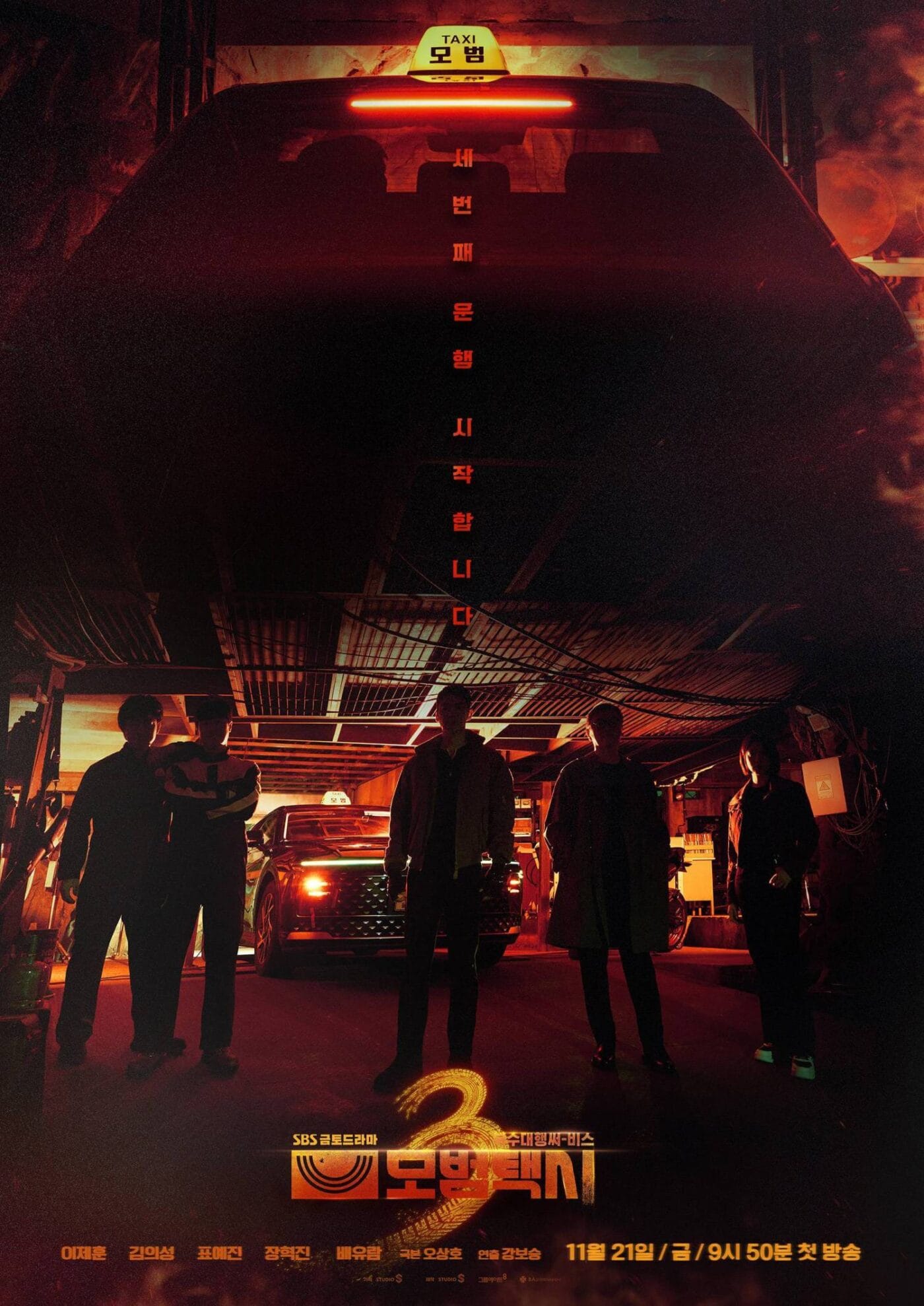

The “Rainbow Taxi” motto used to be simple: Justice without taking lives. That rule is dead.
Taxi Driver 3 marks a jarring departure for the franchise. We have moved from mere extraction to total elimination, and the show is no longer about saving victims—it is about hunting monsters. But when the good guys start looking exactly like the bad guys, does the show lose its soul?
We are declassifying the files. From the polarizing “K-Pop Witch” in our Villain Dossier to the controversial “Fireworks Protocol” in the Tech-Log, this is your comprehensive deep dive into the Rainbow Taxi’s identity crisis.
Synopsis: Justice Has No Borders
Picking up from the legacy of Season 2, the Rainbow Taxi team returns to their secret basement, but the distress calls now ring out from beyond Korea’s borders. The narrative shifts to tackle the harrowing reality of transnational human trafficking and sexual violence.
Led by the chameleon-like Kim Do-ki (Lee Je-hoon), the team—hacker genius Ahn Go-eun (Pyo Ye-jin), the engineering duo Choi and Park, and the steadfast CEO Jang—confronts a system where the police shrug, the authorities stall, and everyone who should help seems either compromised or overwhelmed. This season, the enemy has more power, forcing the team to navigate a world where corruption has swallowed entire communities.
Themes: The Fantasy of Rescue
1. The “Real-World” Horror vs. Fantasy
This season hits uncomfortably close to reality. The narrative mirrors severe crises in regions like Sudan, Somalia, and Haiti, where sexual violence is an ongoing emergency. The show posits a painful fantasy: the wish for a simple taxi to swoop in and save those the world has forgotten. It highlights that the show’s power isn’t just about revenge; it is protection, it’s restoration, it’s exposing systems that prefer silence over accountability.
2. The Shift in Morality: Killing vs. Justice
A controversial shift this season is the darker tone regarding the villains’ fates. In previous seasons, the motto was justice through revenge without taking lives, but Season 3 marks a departure where revenge often leads to killing. This moral change may not sit well with everyone and alters the show’s core identity, moving it away from extraction toward elimination.
3. The Stagnation of Vigilante Justice
A critical tension is the feeling that revenge becomes repetition. While the extraction of victims remains satisfying, the episodic structure—monster appears, monster is destroyed—risks turning justice into a peculiar business model. Without an overarching villain connecting the dots, the justice served can feel routine rather than cathartic.
4. Found Family vs. Professional Distance
The heart of the show remains the “Rainbow Taxi family,” yet while the family dynamic radiates genuine affection, the emotional stakes regarding their safety felt a bit tamped down. The strange lukewarm reaction of the team to Do-ki’s near-death experiences—such as the bomb scene or the Samheung case—left a feeling of being rather stupid for thinking there would be some serious stakes and repercussions.
Character Analysis
Kim Do-ki (The Chameleon)
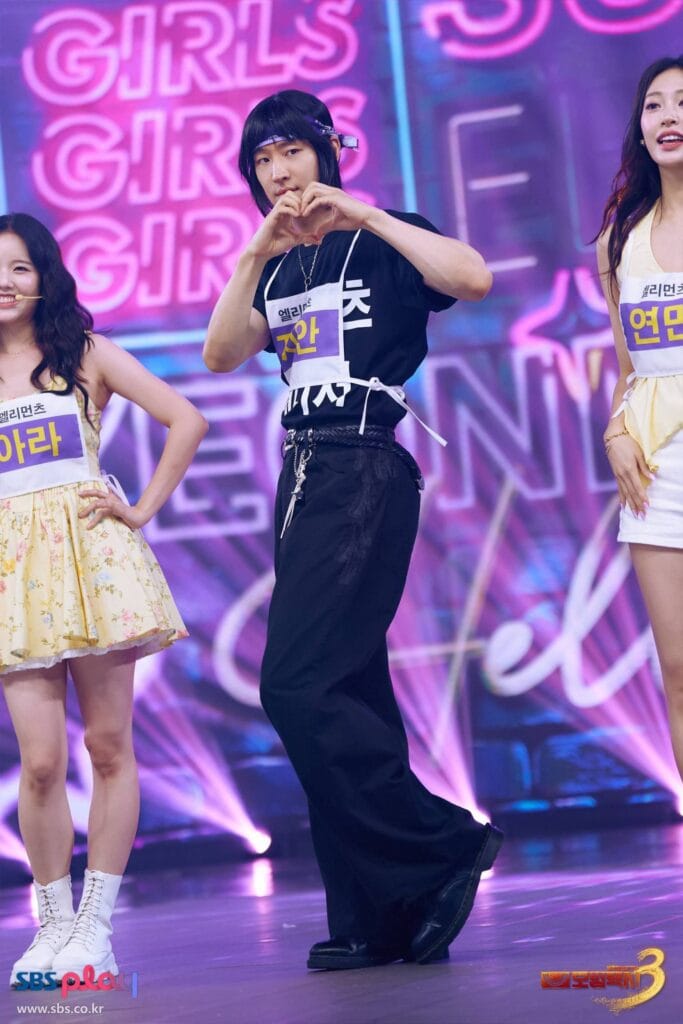
Played by Lee Je-hoon, Do-ki remains the gravitational center of he whole series. He is brilliant in the goofy disguises he uses to outwit villains yet invincible in combat. This season showcases his range: from a country boy hick to a full-blown idol group member (complete with performance). His action sequences are intense and precise, notably a wire fight in Episode 8″ and a sexy and crazy good reverse car driving scene in Episode 14.
Ahn Go-eun (The Ace)
Pyo Ye-jin has evolved from a nerd with supercomputer skills to a confident operative who literally kicks ass. Her chemistry with Do-ki is a focal point; they are like soulmates who can ground each other. However, the show’s handling of their potential romance—teasing a few fake romantic moments like a newlywed arc— felt it was disconnected and probably unnecessary.
CEO Jang Sung-chul (The Architect)
The CEO Kim Eui-Sung remains a standout character, possessing a mysterious yet powerful presence with elegance and strength that holds the team together. This season offers a deeper look into his history, exploring the back story as the case was directly tied to him and how he started the organization to find justice for victims.
The Engineering Duo: Choi & Park (The Heart)
Bae Yoo-Ram and Jang Hyuk-Jin are the season’s unsung heroes. Despite short screen time, they manage to be incredibly entertaining. Their humor feels effortless, and their chemistry allows them to bounce lines off each other naturally, brightening up every episode they are in.
🎙️ Memorable Lines & Catchphrases
- “Dispatch 5283, Watching Complete.”(Kim Do-ki’s signature sign-off after confirming a target or completing surveillance.)
- “So you do speak Japanese?!”(A moment of meta-comedy from the script where the team reacts to Do-ki’s undercover linguistic skills.)
- “Did I just say car service – 5283 goodbye?”(A poignant reflection on the potential end of the Taxi Driver journey.)
Cinematography & Visuals
The production value of Taxi Driver 3 has leveled up, utilizing international locations to create a vivid and fast-paced aesthetic. The show has embraced a darker tone, departing from the colorful vintage vibe of the past.
However, not every visual change landed well. The new “Deluxe Taxi” model might seemed and criticized as ugly and too modern, failing to fit the show’s established vibe34. Additionally, action sequences occasionally broke immersion, specifically in the Samheung Island case, where characters can be seen firing a shotgun too much consecutively without reloading.
Impact & Reception: The “Hybrid” Verdict
Taxi Driver 3 is a polarizing experience.
The Praise:
At its best, the show is a masterclass that balances comedy and the light-hearted with the harsh reality of the world. The removal of a single overarching villain prevented the plot from becoming draggy, thus allowing the specific weekly villains to shine.
The Critique:
Conversely, the episodic structure may frustrate those looking for a cohesive narrative. The finale (Episode 16) was a particular point of contention, easily seen as both weir” and confusing. The climax involved a baffling gunshot scene, a disjointed dream-like sequence, and an alternate timeline that can be truly infuriating to the fans who just want a clear resolution for the main timeline’s relationships.
📽️ A Special Episode: Episode 1
“The Dispatch to the Forgotten” 🌍💔
If one episode epitomizes the soul of Season 3—both its ambitious reach and its crushing emotional weight—it is the Season Premiere.
While later episodes struggled with repetition, Episode 1 in a sense lays everything bare. It moves the camera away from the polished streets of Seoul to a lawless borderland where women are lured by false promises and trapped in systems that feed on their vulnerability.
This episode stands out because it transcends the genre of an action-thriller to become a cathartic and heartbreaking commentary on real-world atrocities. For viewers aware of the ongoing crises in places like Sudan, Somalia, and Haiti, this episode was not just entertainment; it was a painful reminder of where institutions have crumbled and conflict has swallowed entire communities.
The special nature of this episode lies in its Moral Clarity. In a world where the police shrug and authorities are compromised, the Rainbow Taxi team doesn’t wait for permission. They don’t ask victims for more evidence; they simply act and care. It landed so hard because it showed what justice could look like if it prioritized victims instead of protecting systems.
It set a bar for emotional resonance that the rest of the season—with its focus on goofy disguises and fake romance—struggled to maintain. It was the moment the fantasy felt most needed, and most painful, because we know that, in some parts of the world, this isn’t a plot; it’s daily life.
📂 The Villain Dossier: “Celebrity of Evil”
Unlike Season 1 (gritty criminals) or Season 2 (shadowy cults), Season 3 adopted a Boss Rush format. Each major arc was anchored by a high-profile guest star playing against type, creating a jarring contrast between their public image and on-screen cruelty.
Target 03: Kang Ju-ri (The “K-Pop Witch”)
- Played By: Jang Na-ra
- Episodes: 9–10 (The Yellow Star Case)
- Archetype: The Benevolent Tyrant
- Profile: Perhaps the most shocking casting coup of the season. Jang Na-ra, historically known for her wholesome/romantic lead image, completely dismantled her public persona to play the CEO of Yellow Star Entertainment.
- Modus Operandi: She used debt as a weapon, entrapping trainees with exorbitant fees while publicly presenting herself as a mother figure.
- Key Scene: In the season’s most disturbing moment, she forces a trainee to perform on broken glass to test her desperation, all while maintaining a warm smile.
- The Takedown: Rainbow Taxi dismantled her by infiltrating her agency as investors, exposing her fraud during a livestreamed Debut Showcase.
Target 01: Keita Matsuda (The Foreign Threat)
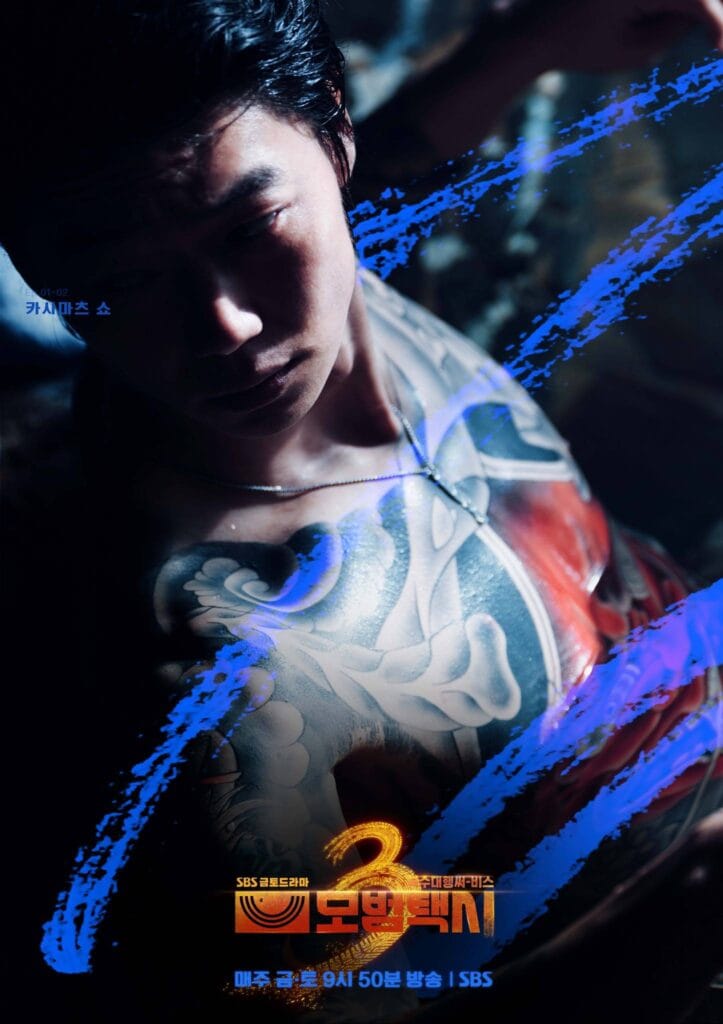
- Played By: Sho Kasamatsu
- Episodes: 1–2
- Profile: A Yakuza lieutenant operating a loan-sharking ring targeting Korean tourists in Japan. Kasamatsu brought a feral, physical intensity that set the darker tone for the season.
- Significance: He was the first villain to hunt Do-ki back, realizing the taxi driver was not a random vigilante.
Target 02: Cha Byeong-jin (The Scammer)
- Played By: Yoon Si-yoon
- Episodes: 3–4 (Noblesse Motors)
- Profile: A former lawyer turned used-car scam kingpin. Known for good boy roles, Yoon underwent significant weight loss to appear gaunt and manic, playing an unhinged narcissist who laughed while crushing victims’ cars.
Final Boss: Lt. General Oh Won-sang
- Played By: Kim Jong-soo
- Episodes: 15–16
- The Critique: While he orchestrated a false flag border incident to provoke martial law, the writing suffered from cartoonish villainy. His plan to fire tanks at civilians was thwarted by a controversial plot device involving fireworks—a visual spectacle that undermined the gravity of the threat.

🛠️ Rainbow Taxi Tech-Log: Season 3 [Declassified]
While the villains brought star power, the Rainbow Taxi team brought hardware. This season saw a massive overhaul in the team’s arsenal, moving from analog grit to high-tech warfare.
1. Vehicle: The “Black Cab” (Mark III)
- Base Model: Modified Hyundai Grandeur (7th Gen) with Chameleon cosmetic plating.
- New Feature: The “Ghost” Mode: Unlike the simple license plate flippers of Season 1, the Mark III features a signal-jamming chassis that disrupts CCTV feeds within a 50-meter radius. This was critical during the Samheung Island infiltration (Ep 12), allowing Do-ki to enter the secure compound undetected by digital surveillance.
- Combat Upgrade: Reinforced Suspension: Confirmed in the “Cliff Dive” sequence (Finale). The taxi’s survival frame allowed it to withstand the vertical drop that concluded the fight with Lt. General Oh.
2. Weaponry: The “Fireworks” Protocol
- Deployment: Episode 16 (Finale)
- Target: 2802th Special Missions Force (Tanks)
- Specs: A sabotage modification applied to the enemy’s main battle tanks. Engineer Choi replaced the live firing pins and ammunition with high-yield pyrotechnics.
- Effect: Instead of lethal rounds, the tanks fired harmless, colorful fireworks. While seemed childish the tech log confirms it was a deliberate move to neutralize the military coup without inflicting mass casualties—preserving the team’s moral code despite the season’s darker tone.
3. Surveillance: The “Idol” Uplink
- Deployment: Episode 9 (Yellow Star Entertainment Case)
- Tech: A miniaturized streaming rig disguised as a standard K-Pop “In-Ear Monitor.”
- Function: Allowed Go-eun to hack the venue’s “Debut Showcase” livestream in real-time, overlaying the footage of CEO Kang Ju-ri’s abuse directly onto the jumbo screens while Do-ki performed on stage.
4. Disguise: The “Keita” Prosthetics
- Deployment: Episode 1-2
- Tech: Hyper-realistic silicon epidermis used to transform Do-ki into the scarred Yakuza enforcer.
- Note: This marked a significant upgrade from the wigs and glasses of Season 1, utilizing 3D-printed facial mapping to fool biometric scanners at the Japanese loan shark’s HQ.
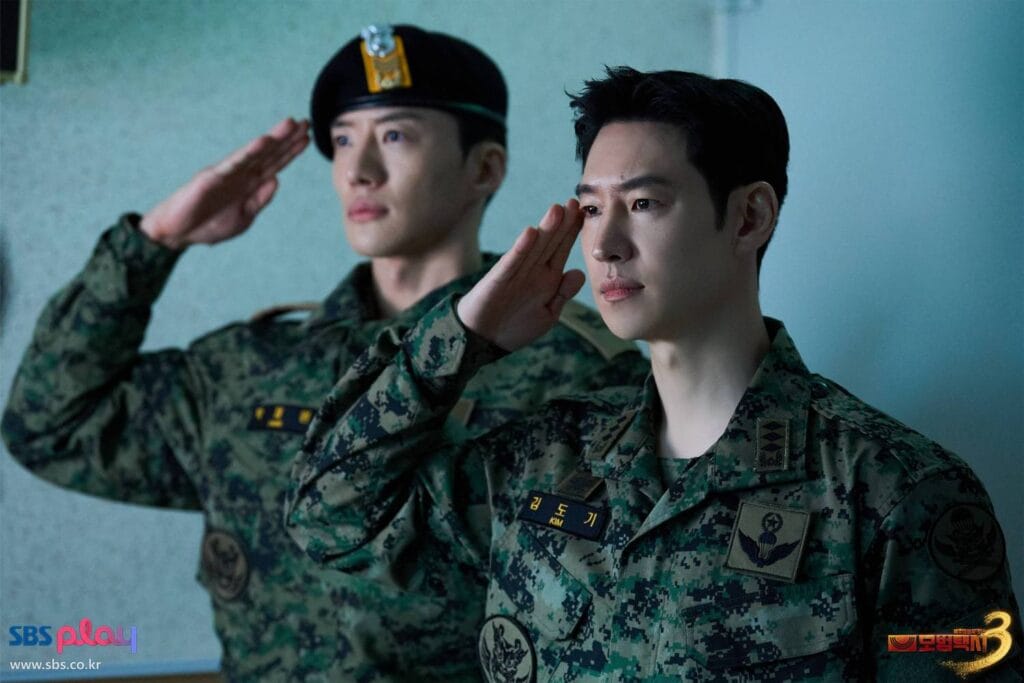
Taxi Driver 3 Analysis Conclusion
Taxi Driver Season 3 is a season of high highs and confusing lows. It succeeds as a showcase for Lee Je-hoon’s incredible acting range and shines a necessary light on the horrors of global trafficking. It remains a visually stunning, absorbing thriller that offers catharsis in an unjust world.
However, it suffers from sequel fatigue. The loss of an overarching narrative backbone makes it feel like content production rather than a story that needed to be told. The confusing handling of the romance and the weird finale prevent it from surpassing the first season’s legacy.
Verdict:
- WATCH if you are a die-hard fan of Lee Je-hoon, enjoy the found family dynamic, and want stylish, episodic action with cool new tech like the “Ghost Mode” Taxi.
- SKIP (or stick to Season 1) if you require high-stakes storytelling where the heroes feel genuinely vulnerable, or if you have a low tolerance for repetitive plot structures.
🎬 Behind the Scenes: Script Reading
Watch the cast bring these characters to life in the official Season 3 script reading session.
SCRIPT READING | Taxi Driver 3




Leave a Comment