


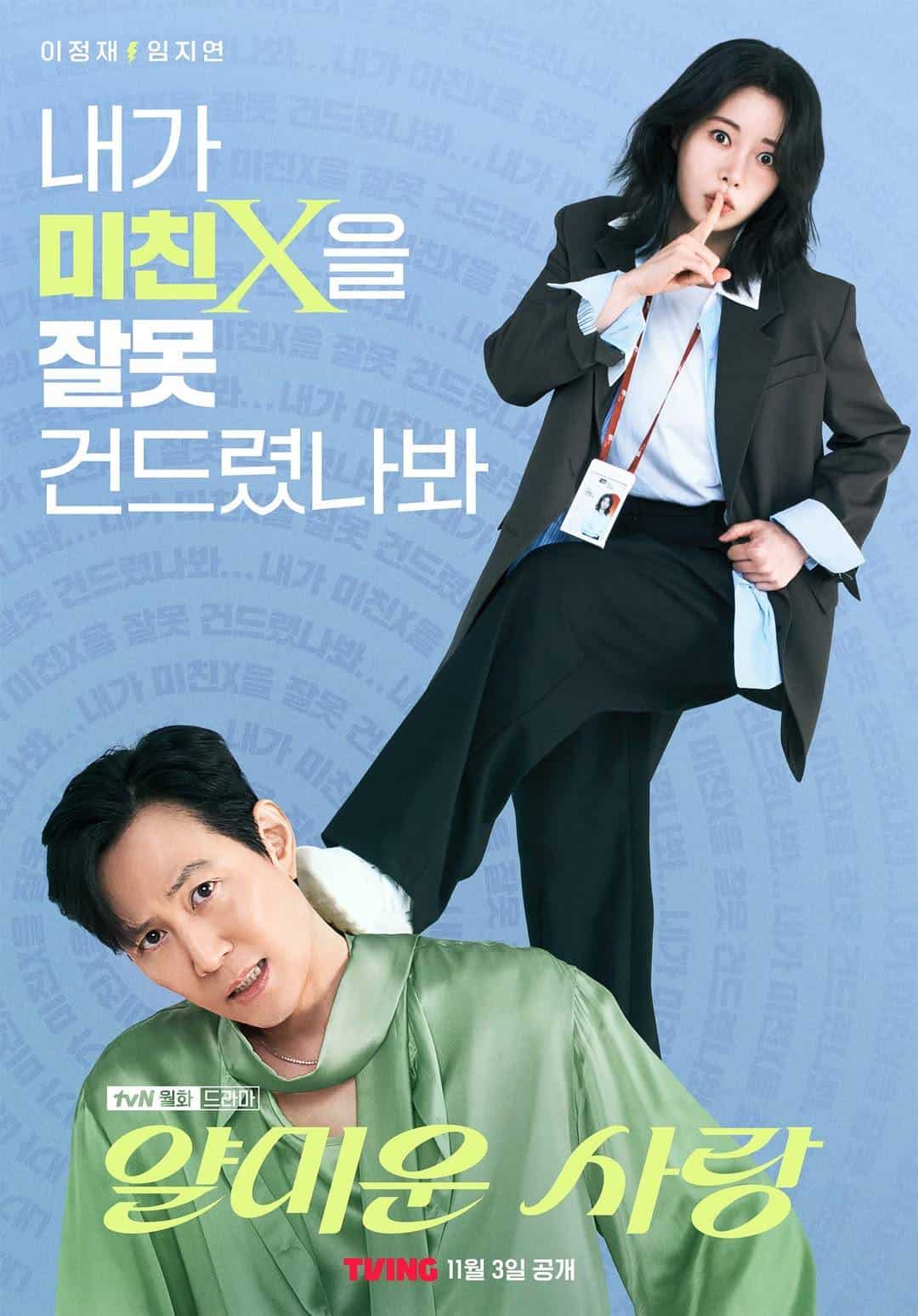

When tvN dropped the first teaser for Nice to Not Meet You, the comment section turned into a battlefield.Domestic viewers immediately zeroed in on the visuals, calling the chemistry between Lee Jung-jae and Lim Ji-yeon realistic only if they were playing “uncle and niece”. Critics argued that unlike Secret Love Affair (2014), where the age gap was the point of the plot, this show awkwardly tried to ignore it. Rumors even swirled that this casting wasn’t about art, but simply a convenient package deal for actors from the same agency. But while the netizens were typing furious comments, the domestic ratings were climbing.
Nice to Not Meet You is not a flawless masterpiece. It certainly does not reinvent the romantic comedy genre. However, it remains a delightfully engaging, mature romantic comedy at its core. It is a series that knowingly laughs at its own clichés, leaning heavily into its absurdity to deliver a feel-good watch. So, who won the war—the angry commenters or the A-List stars? We are diving deep into the industry mechanics, the real reception, and the verdict on whether this controversy was a PR nightmare or a marketing genius.
When Fame Meets Reality
Synopsis: A Collision of Worlds
The narrative engine of Nice to Not Meet You promises an enticing blend of an “annoyance-to-affection” romance. Set against the high-stakes, pressure-cooker environment of celebrity culture and media politics, the story intertwines the lives of a deeply typecast actor and a tough journalist.
Lim Hyun-joon (played by Lee Jung-jae) is a veteran, top-class television actor. For years, he has been aggressively typecast, best known for repeatedly playing the exact same relentless, gritty detective named Kang Pil-gu. Exhausted by this monotonous fame and tired of being boxed into a single macho role, Hyun-joon desperately longs to prove that he can shine in romantic or melodramatic parts.
On the opposite side of this dynamic is Wi Jeong-sin, (portrayed by Lim Ji-yeon). She is an ambitious, highly respected, and award-winning political journalist. However, following a major scandal, she is unceremoniously demoted and reassigned to the entertainment beat to cover celebrity gossip. For Jeong-sin, this demotion is not just a punishment; it is a nightmare that she makes her absolute disdain for very clear. When she inevitably crosses paths with Hyun-joon, their relationship does not begin with instant, undeniable chemistry. Instead, their dynamic begins with intense clashes, friction, and chaotic power plays.
Themes: The Meaning Behind the Madness
The writing often fluctuates wildly, jumping from serious political thriller tropes to slapstick comedy. However, when examining the thematic subtext of the narrative, several potent and meaningful ideas rise to the surface:
- The Facade of Fame Versus Authentic Connection: The drama serves as a gentle social commentary on how the entertainment industry forcibly shapes public images and inflates fragile egos. The show attempts to talk about the stark contrast between fame and reality. The core message is a powerful reminder that the public often decides who celebrities are before ever truly knowing them. Hyun-joon’s journey is not about achieving more fame; it is about seeking a real connection away from the spotlight.
- Embracing Age and Midlife Crises: The series bravely tackles the realities of aging in a youth-obsessed industry. Instead of ignoring the noticeable age difference between the lead characters, the show actively leans into it. It focuses on two seasoned professionals in their respective fields who are dealing with midlife crises and severe career fatigue. This creates a mature, adult romance that actively avoids relying on youthful, naive tropes.
- The Meta-Reality of the “Drama Within a Drama”: The narrative expertly utilizes the concept of filming a K-drama inside a K-drama, specifically focusing on the fictional show Kang Pil Gu. Watching these segments adds a playful, satirical meta element to the series. It injects necessary, high-octane energy into the show, making the overall narrative feel significantly more dimensional than a standard romantic comedy.
- Friction as a Catalyst for Growth: This is not a story of easy love. The series thrives on miscommunication, massive ego clashes, and public spectacle. The central relationship deliberately feels unwieldy and awkward, which comes across as a highly intentional narrative choice. The show breaks prejudices by proving that love and human connection aren’t limited by public image or age.

Character Analysis: The Craft of Performance
The true saving grace of Nice to Not Meet You is its phenomenal cast. The actors took a script that could have easily been a forgettable, “so-so” rom-com and actively elevated it into a genuine character study.
Lim Hyun-joon (Played by Lee Jung-jae)
After years of delivering intense, high-stakes performances in global phenomenon’s like Squid Game, seeing Lee Jung-jae pivot to a lighthearted rom-com was a massive risk that worked shockingly well. He portrays Hyun-joon with a weary, grounded energy, perfectly capturing a star who is fundamentally bored with being a star. His characterization is heavily polarized, however. At his best, Lee is warm, gentle, and grounded, using his expressive eyes to convey genuine panic in public or soft, nostalgic longing in private. At his worst, the character is written as a whiney snowflake diva, forced to throw literal toddler tantrums that can feel jarring to watch. Despite limitations in the script’s ability to allow for deep, honest vulnerability, Lee’s comedic timing and smooth charm successfully carry the role.
Wi Jeong-sin (Played by Lim Ji-yeon)
Lim Ji-yeon arguably had the much more challenging task. She had to transition from the fierce, prickly intensity of her past villain roles to a frumpy, love-clueless, nerdy journalist. She anchors the show’s reality, brilliantly portraying someone who is physically pained by having to care about celebrity gossip. Her comedic timing is exceptional, and she manages to soften her inherent sharpness without ever losing her edge. While some lighter, cuter moments felt slightly flat compared to her dramatic prowess, she remains an amazing, stubborn lump of a tenacious and competent female lead.
Director Park Byeong-gi (Played by Jeon Seong-woo)
Often the only rational human being on screen amidst the sitcom-style chaos, Director Byeong-gi is an absolute highlight. Played with magnificent, unhinged obsession by Jeon Seong-woo, his deadpan reactions to the leads’ endless drama provided consistent comedic gold. He exuded depth and silliness simultaneously, fully embracing the absurdity of his environment with ease.
Chief Yun (Played by Seo Ji-hye)
As Chief Yun, Seo Ji-hye is the undeniable scene-stealer of the series. Carrying a composed warmth and emotional ease, she excels in the rom-com space, surprising viewers with hilarious little touches and mannerisms. Ironically, her natural rapport and camaraderie with Lee Jung-jae created a chemistry that was arguably far more convincing than the main pairing. Her presence highlighted what the main romance lacked, making her feel heavily underutilized by the writers.
Cinematography & Visuals: Polished Chaos
Visually, Nice to Not Meet You is incredibly pleasing and well-directed, succeeding in establishing a comfortable, enjoyable atmosphere for the viewer. Directed by Kim Ga-ram, the production design does an excellent job of capturing the frenetic, messy chaos of celebrity life behind the scenes with a polished, lively aesthetic.
However, the visual crowning achievement of the drama is the clear, distinct differentiation between the “real world” of the characters and the meta-world of the Kang Pil-gu drama-within-a-drama. The action scenes within the fake drama are surprisingly engaging, intense, and heavily layered. These fictional segments are visually reminiscent of darker, gritty thrillers like Voice. This stark contrast between the high-octane lighting of the fictional detective show and the bright, slapstick reality of the actors’ daily lives adds much-needed visual depth to a narrative that sometimes stays too surface-level.

Impact & Reception: Beating the “Shallow Noise”
The critical reception of the series was heavily polarized, serving as a massive battleground between shallow prejudice and eventual commercial triumph. When the casting of a 52-year-old Lee Jung-jae and a 35-year-old Lim Ji-yeon was first announced, netizens were in an absolute tizzy over the age difference. People were downright nasty, acting as if older men were not allowed to fall in love, creating a wall of shallow noise before the first episode even aired.
However, the drama’s greatest triumph was completely flipping the script on its vocal haters. By leaning into the age difference and addressing it in satisfying ways throughout the plot, viewers eventually stopped seeing the age gap and started seeing the characters. By the finale, the ratings completely dominated its time slot. Hitting peaks of over 5% to 6%—highly solid numbers for a cable rom-com—the show found a massive audience, further bolstered by its streaming availability on platforms like TVING and Wavve.
Yet, we must pivot to the critical reality: the show’s commercial success masks a deeply flawed script. The writing is often described by fans as a “total mess” and a bit of a “waste” for such a talented cast. For many viwers, the romance itself was the absolute weakest aspect, with noticeable awkwardness replacing genuine chemistry between the leads. Furthermore, the overarching villain subplot was entirely forgettable and lacked any real narrative purpose. Ultimately, the series succeeded in spite of its writing because it understood its own limitations, committing fully to its absurd premise rather than trying to take itself too seriously.
A Special Episode: Episode 1 & The Finale 🎬💥
To truly understand the chaotic tonal spectrum of Nice to Not Meet You, we must deep-dive into the distinct bookends of the series: the premiere’s meet-disaster and the finale’s emotional payoff.
🚗 The Meet-Disaster (Episode 1): The drama kicks off with an energy that feels absolutely impossible to contain—it is loud, messy, and unabashedly chaotic. The introduction of Hyun-joon and Jeong-sin does not feature a standard meet-cute; instead, we are given a complete meet-disaster. The two collide through a series of escalating mishaps: a car accident, a humiliating red-carpet stumble, and a viral public embarrassment. The show brilliantly embraces this chaos. When Jeong-sin accidentally breaks into Hyun-joon’s car, or when the actor suffers a viral wardrobe malfunction, the series firmly establishes its unapologetically over-the-top humor. Episode one splits their stories neatly, wrapping his world in celebrity pressure and hers in a political conspiracy, blending the absurd with the serious right from the jump.
🫂 The Quiet Resolution (Episode 16): If the premiere was loud, the finale was a masterclass in quiet, earned resolution. After enduring 16 episodes of dramatic misunderstandings and a serious panic disorder subplot that admittedly resolved far too easily, the final episode finally felt like things were coming together. The series proved to be a true slow-burn, devoid of steamy kisses or rushed, forced skinship. The emotional payoff culminates beautifully in an incredibly adorable hug scene in the last few minutes of the show. Free from fake romance, this simple, lovely interaction anchored the drama as a genuinely emotionally satisfying experience, giving viewers the mature payoff they were waiting for.
Nice to Not Meet You Final Verdict
This drama is an undeniable anomaly in the 2025-2026 K-drama landscape. It is a series plagued by a mostly messy script, a completely forgettable villain, and some pacing issues. Yet, it is simultaneously a delightful, endearing surprise that leaves a lasting, feel-good impact. By casting elite actors against type and allowing them to fully embrace the zaniness of their characters, the production successfully humanized the cold machinery of the entertainment industry. It is light-hearted, a little silly, and relies heavily on the sheer brilliance of Lee Jung-jae, Lim Ji-yeon, and a stellar supporting cast to elevate it from being slightly over-hyped to a genuinely fun ride.
The Verdict: WATCH IT. If you are open-minded, tired of the usual K-drama formulas, and looking for a mature, slow-burn comedy that doesn’t take itself too seriously, this will leave you smiling. It might not be a flawless masterpiece, but as reality has it, relationships are unwieldy and awkward—and so is this wonderfully absurd drama.
Bonus Clip
A quick look at the chaotic dynamic and early tension between the two lead Nice to Not Meet You characters:



Leave a Comment