



In the fast-paced world of modern Seoul, dominated by sleek skyscrapers and smartphone screens, there is a growing hunger for something slower, grittier, and more heartfelt. The “Retro Trend” in Korean entertainment isn’t just a passing fad; it is a cultural movement. As we close out 2025, the search volume for Must-Watch Retro K-Dramas has reached an all-time high, proving that viewers are eager to trade in the glossy CEO romances for the analogue warmth of the 20th century.
Whether it is the raw survival instincts required during the 1990s financial crisis, the revolutionary spirit of the 1980s, or the post-war grit of the 1950s, these dramas offer more than just vintage fashion. They offer a window into the soul of Korea’s rapid transformation. These stories are stripped of modern distractions, forcing characters to rely on face-to-face connection, handwritten letters, and the sheer will to survive.
If you are looking to escape the present, we have curated the ultimate narrative guide to the best time-slip and period dramas with that unmistakable vibe of retro K-dramas. From heartwarming nostalgia to heart-pounding thrillers, here are the nine titles that define the retro genre.
I. The Nostalgia Trips: Heartwarming & Slice of Life
These K-dramas focus on the power of community, family, and the bittersweet beauty of youth.
Reply 1988 (1988)
If there is one drama that sits on the throne of the retro genre, it is undoubtedly Reply 1988. Set in the Ssangmun-dong neighborhood of Seoul during the lead-up to the 1988 Seoul Olympics, this series is a masterclass in ensemble storytelling. Unlike standard dramas that focus solely on a lead couple, Reply 1988 invites you into the living rooms of five different families, creating a rich tapestry of the golmook (alleyway) culture that has largely disappeared from modern Korea. It captures a specific moment in time when neighbors shared side dishes, kids slept over at each other’s houses, and the biggest stress was holding onto a portable cassette player. The “husband hunting” mystery—guessing which of the childhood friends the protagonist Deok-sun marries—keeps the plot moving, but the true heart lies in the parents’ stories. It is a tear-jerking, laugh-out-loud tribute to youth that reminds us that while trends change, the love of family remains constant.
Twenty-Five Twenty-One (1998)
While Reply 1988 is about community, Twenty-Five Twenty-One is a piercing look at the collision between youthful dreams and harsh reality. Set against the backdrop of the 1998 IMF Financial Crisis—a period of massive national trauma for South Korea—the drama follows Na Hee-do, a high school fencing prodigy whose team is disbanded due to lack of funds, and Baek Yi-jin, a wealthy heir whose family is destroyed by bankruptcy. The series masterfully uses the late 90s aesthetic, from pager codes to full-volume comic book stores, not just for style, but to emphasize the era’s fleeting nature. The chemistry between Kim Tae-ri and Nam Joo-hyuk is electric, portraying a love that is supportive and mature beyond their years. It is a story about how history shapes individuals, exploring whether pure passion can survive when the world around you is collapsing. It is vibrant, nostalgic, and famously heartbreaking in its realism.
Twinkling Watermelon (1995)
For those who want the retro vibe with a touch of magical realism, Twinkling Watermelon offers a vibrant, musical escape to 1995. The story follows Eun-gyeol, a CODA (Child of Deaf Adults) student with a gift for music, who travels back in time and meets his father as a high school student—back when he could still hear and speak. This setup allows for a unique bonding experience as the son joins his father’s band, trying to rewrite history to prevent the accident that took his father’s hearing. It is a bright, energetic drama that celebrates the youth culture of the mid-90s, filled with acoustic ballads and the innocence of high school crushes. Beyond the fun time-travel mechanics, it delivers a profound message about communication and understanding your parents not just as authority figures, but as young people with their own unfulfilled dreams.
II. The Time-Warp Thrillers: Crime, Mystery & Justice
These retro K-dramas strip away modern forensics, forcing detectives to rely on instinct and grit.
Signal (1989/2015)
Often cited as the best crime thriller in K-drama history, Signal uses the retro element to solve the unsolvable. The premise is gripping: a modern-day criminal profiler discovers an old walkie-talkie that connects him to a detective in 1989. Together, across the barrier of time, they attempt to stop serial killers before they strike. The drama is heavily inspired by the real-life Hwaseong Serial Murders of the 80s, grounding its supernatural premise in very real, painful history. The 1989 timeline is shot with a distinct, golden-hued filter that contrasts sharply with the cold, blue tones of the present, visually separating the eras. It is not just a police procedural; it is a philosophical inquiry into fate. It asks the viewer a desperate question: if you could send a message to the past to save a victim, would you do it, even if it changed the future in unpredictable ways?
Life on Mars (1988)
While Signal is serious and heavy, Life on Mars (a remake of the UK series) brings a chaotic, buddy-cop energy to the genre. When a modern forensic scientist wakes up in 1988 after an accident, he finds himself in a world without DNA testing, CCTV, or digital databases. He is forced to work with a rough-around-the-edges detective who believes that beating a confession out of a suspect is standard procedure. The clash between modern scientific logic and the “gut feeling” policing of the 80s creates brilliant narrative tension and humor. The production design is impeccable, capturing the gritty, smoke-filled atmosphere of 80s police stations. It is a psychological puzzle wrapped in a retro aesthetic, driven by the bromance between the two leads who eventually learn that justice requires both hard evidence and human intuition.
Chief Detective 1958 (1958-60s)
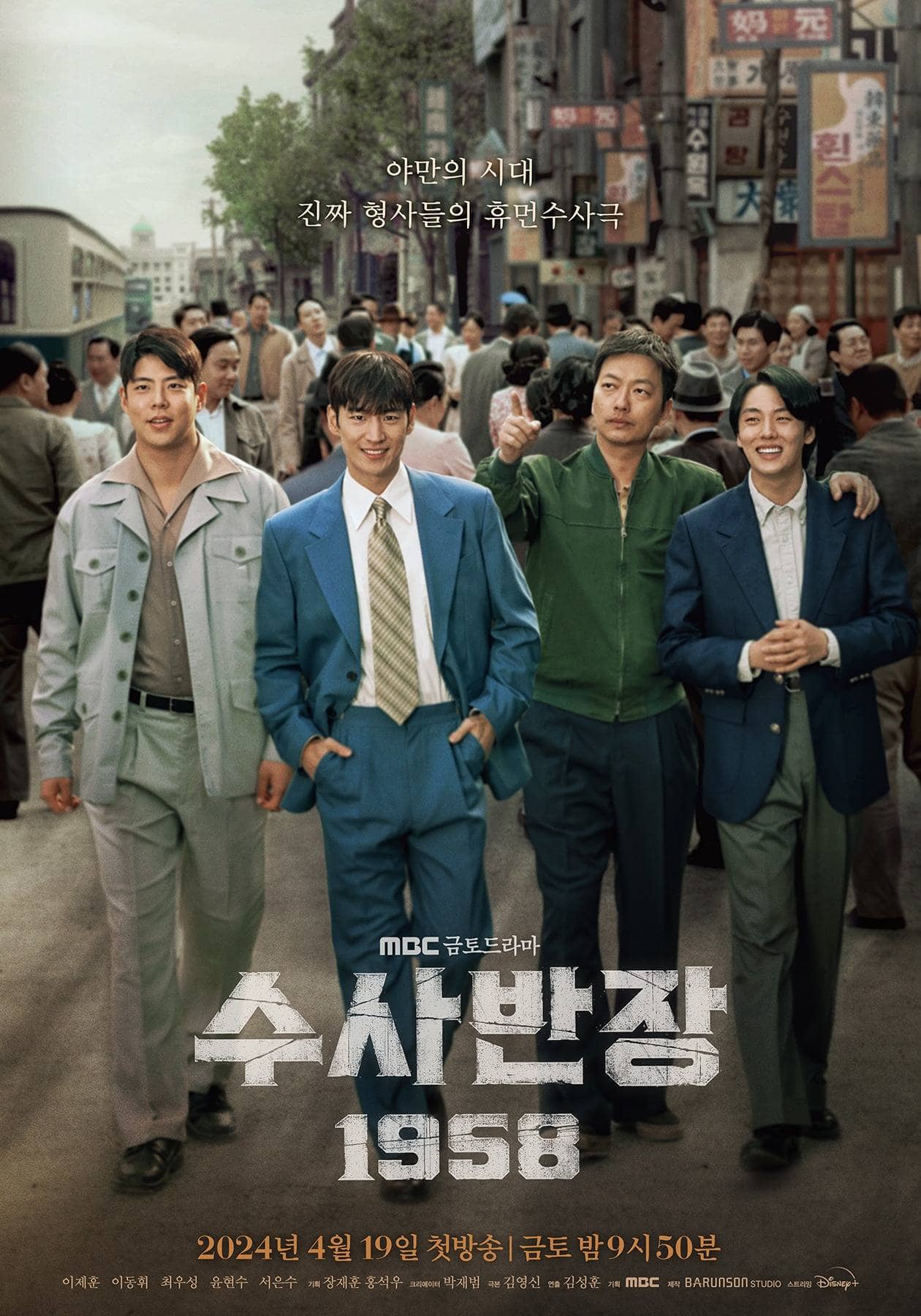
Going further back in time than most on this list, Chief Detective 1958 is a prequel to Korea’s legendary police procedural Chief Inspector, which aired for nearly 20 years. Set in the post-war ruin and reconstruction of the late 1950s and early 60s, this 2024 hit brings a “cowboy western” feel to the streets of Seoul. It follows a younger version of the iconic Detective Park Young-han as he arrives in Seoul to fight petty thieves, gangsters, and corrupt politicians. The “retro” here is distinct—it is the era of trams, fedoras, and raw fistfights in muddy markets. It captures a nation trying to rebuild itself from the ashes of war, focusing on the optimism and camaraderie of a team trying to establish law and order in a lawless time. It is action-packed, stylish, and deeply rooted in Korean television history.
III. The Romances: Love in Turbulent Times
In these dramas, love is a dangerous act. The stakes are life and death.
Youth of May (1980)
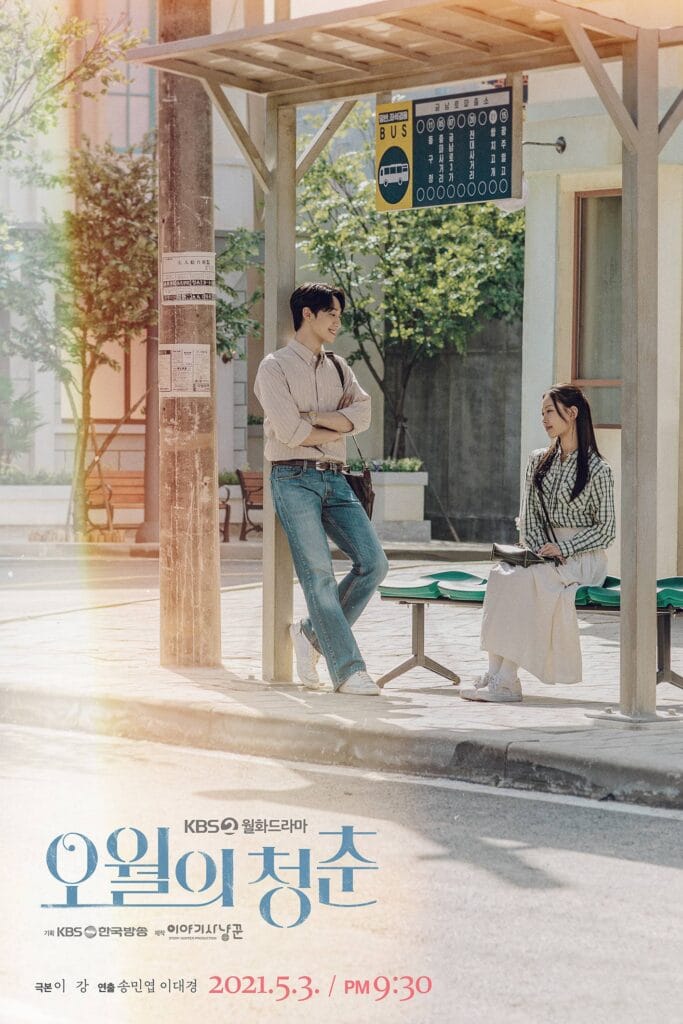
Youth of May stands as a hauntingly beautiful testament to the power of love amidst tragedy. Set during the Gwangju Uprising of May 1980—a pivotal pro-democracy movement that was brutally suppressed by the military dictatorship—the drama focuses on a medical student and a nurse who fall in love. Unlike the stylized action of other period pieces, this drama feels incredibly grounded and human. The romance is tender and classic, filled with handwritten notes and shy glances, which makes the impending historical violence feel even more devastating. The drama does not shy away from the brutality of the era, but it chooses to focus on the resilience of ordinary people. It is a “Melo” in the truest sense, guaranteed to leave a lasting emotional impact. It reminds viewers that behind the casualty numbers in history books were real people who had dates planned for tomorrow.
Snowdrop (1987)
Set in the turbulent year of 1987, another crucial moment in South Korea’s fight for democracy, Snowdrop blends political intrigue with forbidden romance. The story takes place almost entirely within the confines of a women’s university dormitory, where a student hides a wounded man she believes is a pro-democracy activist, only to discover he is a North Korean spy. The confined setting creates a pressure-cooker atmosphere where every look and touch is laden with the threat of discovery. The retro aesthetic here is lush and cinematic, capturing the fashion and music of the late 80s university scene. While it faced controversies regarding its historical depiction, it remains a “must-watch” for the sheer intensity of the chemistry between the leads and the high-stakes narrative where romance is literally a matter of national security.
A Hundred Memories (2025)
No list of retro dramas would be complete without the breakout hit of 2025, A Hundred Memories. This drama has captivated audiences by shedding light on a specific, often overlooked group of workers from the 1980s: the “Bus Girls” (bus conductors). Before automated fare machines, these young women were the heartbeat of Seoul’s public transport, managing packed buses with incredible toughness and grace. The drama explores their friendships, their dreams of education, and their romances with working-class men like boxers and mechanics. It offers a fresh perspective on the 80s—moving away from the university politics of Snowdrop or Youth of May and focusing instead on the daily grind of the working class. With its high production value and modern pacing, it perfectly bridges the gap for viewers who want the retro aesthetic without the slow burn of older series.
Retro K-dramas: Which Decade is Calling You?
The appeal of K-dramas lies in their ability to transport us to a time where emotions felt bigger because the world felt smaller. Whether you choose the warm embrace of 1988, the heartbreaking reality of 1980, or the noir grit of 1958, these shows offer a depth of storytelling that is hard to find in contemporary settings.
For beginners, we always recommend starting with Reply 1988—it is the safest, most heartwarming entry point into the genre. However, if you are looking for the show that everyone is talking about right now in late 2025, A Hundred Memories is the culturally relevant pick that will have you searching for 80s bus tokens and vintage soundtracks.
Which era will you visit first? Let us know in the comments below!


Leave a Comment