


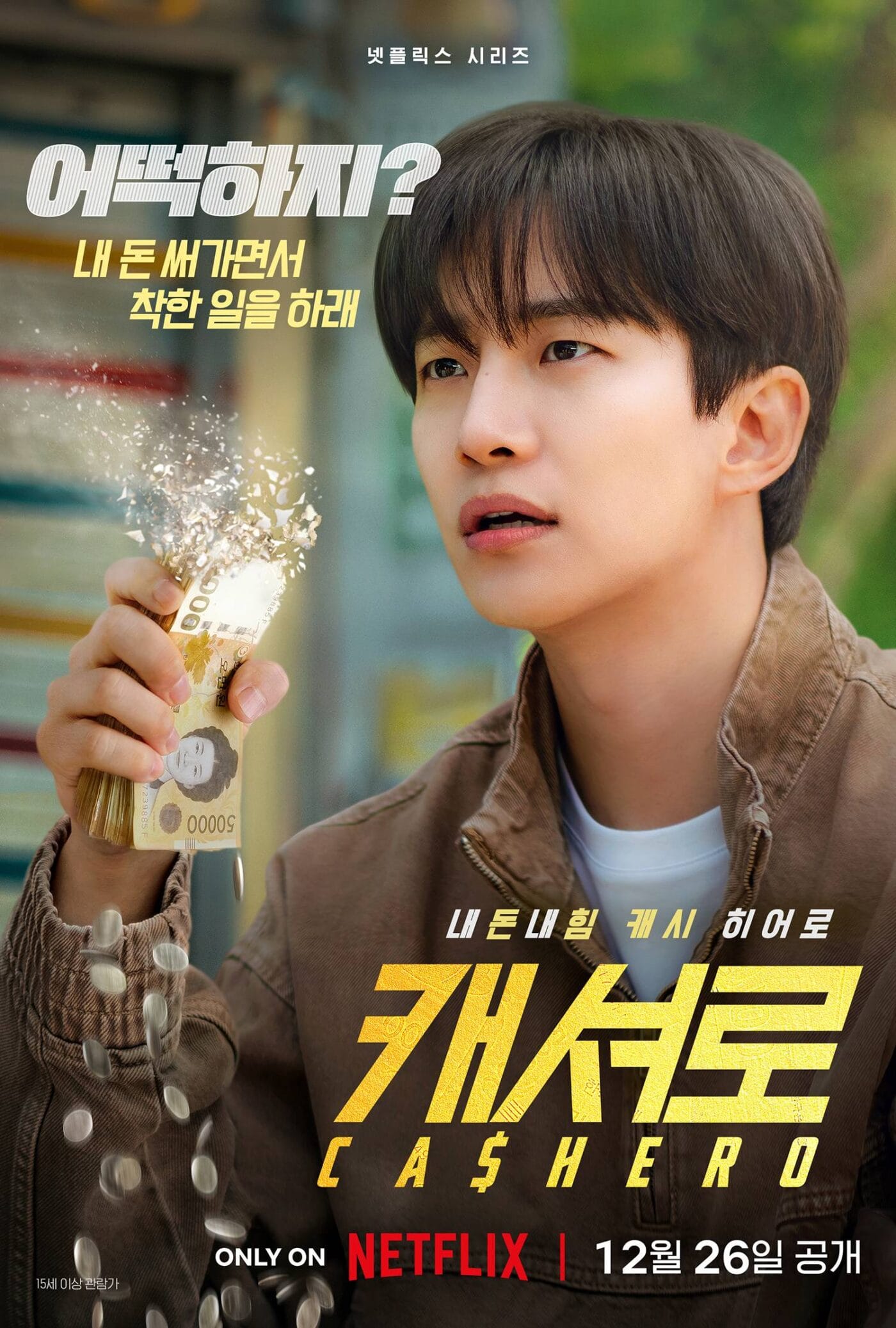

Imagine a superhero who needs to wear a pair of high-waisted white underwear to keep his loose change from falling out during a fight. It sounds hilarious, and for a moment, it is. But a few good jokes do not make a coherent series. Cashero tries to be a social satire, a romance, and a thriller all at once—and fails at most of them. Here is the unvarnished truth about why this show’s “price of heroism” might just be too high for the audience to pay.
In the saturated landscape of superhero media, Netflix Korea attempted to close out 2025 with a premise that is as brilliant as it is blunt: Money is Power. Literally. Cashero arrives with a concept that is undeniably “FIRE”(Financial Independence, Retire Early)—a satirical collision of superhero spectacle and late-stage capitalist anxiety. It asks a tantalizing question relevant to every young adult staring down the barrel of the property ladder: What if saving the world literally drained your life savings?.
However, what begins as an intriguing and socially attuned premise deteriorates into a confused and unevenly written drama. While the show presents itself as a deft combination of social commentary and action, it ultimately falters due to a lack of narrative clarity and plot discipline. I found myself watching a “Konglish mess” that mashes up themes without a single ounce of finesse, trading a clever look at financial stress for a pile of clichés.
It occupies a strange, might say “peculiar” category in the K-drama pantheon. It is certainly not the masterpiece Moving was; it fails to make us connect with its characters in the same visceral way. Yet, despite standing as one of the worst K-dramas released in 2025 in terms of technical execution, it possesses a chaotic energy that makes you feel alive, even if it is infuriating.
Synopsis: A Hero on a Budget
Kang Sang-ung (Lee Jun-ho) appears to be an ordinary man. He works as a timid public servant at a community center, harboring modest ambitions: he simply wants to save enough money to buy an apartment with his longtime girlfriend, Kim Min-suk. His life is defined by the unbearable weight of the Korean property ladder and the desperate need to save every won.
However, his ordinary life is upended when he inherits a supernatural power from his estranged and abrasive father. Kang Sang-ung possesses superhuman strength, but there is a cruel, capitalist catch: his power relies entirely on the amount of physical cash he possesses. He becomes super strong when he holds cash, but using that strength literally consumes the money.
Sang-ung has no desire to be a hero; acts of altruism are something he actively avoids to protect his hard earn savings. Yet, he is drawn into a conflict involving a criminal association hunting down people with supernatural powers. Alongside Byeon Ho-in, a lawyer who phases through walls when drunk, and Bang Eun-mi, whose telekinesis is fueled by calories, Sang-ung must decide if he can afford—literally—to save the world.
Themes: Capitalism, Sacrifice, and “Konglish” Chaos
The drama attempts to juggle several heavy themes, though its success in exploring them is a matter of fierce debate.
- The Irony of Capitalist Heroism. The drama’s strongest asset is its central metaphor. Sang-ung’s power acts as a constant critique of capitalism, highlighting how money controls everything—including justice. Within the South Korean context, where housing insecurity shapes the lives of many young adults, the metaphor is immediately resonant. Strength equals sacrifice, and the bill is always due. However, I argue the show refuses to build a world where money actually matters, treating the financial loss more like a low-level panic or a boring chore rather than a true burden.
- Ordinary People vs. The Chosen Ones. Cashero tries to strip away the glamour of the superhero. Sang-ung is not a billionaire vigilante; he is a civil servant trying to be a good boyfriend. The narrative suggests that the hero is the choice, not the ability. This theme peaks in the finale, suggesting that strength comes from community and small kindnesses rather than hoarded wealth. Got that Bruce Wayne?
- Realistic vs. Romantic Love. The relationship between Sang-ung and Min-suk deconstructs typical romance tropes. After nine years of stagnation, their dynamic is grounded in survival and pragmatism rather than love and puppy eyes. Min-suk’s obsession with numbers is not greed, but survival in a harsh economic system. While she is often framed as nagging, the show validates her fears as necessary tactics for a future that costs money.
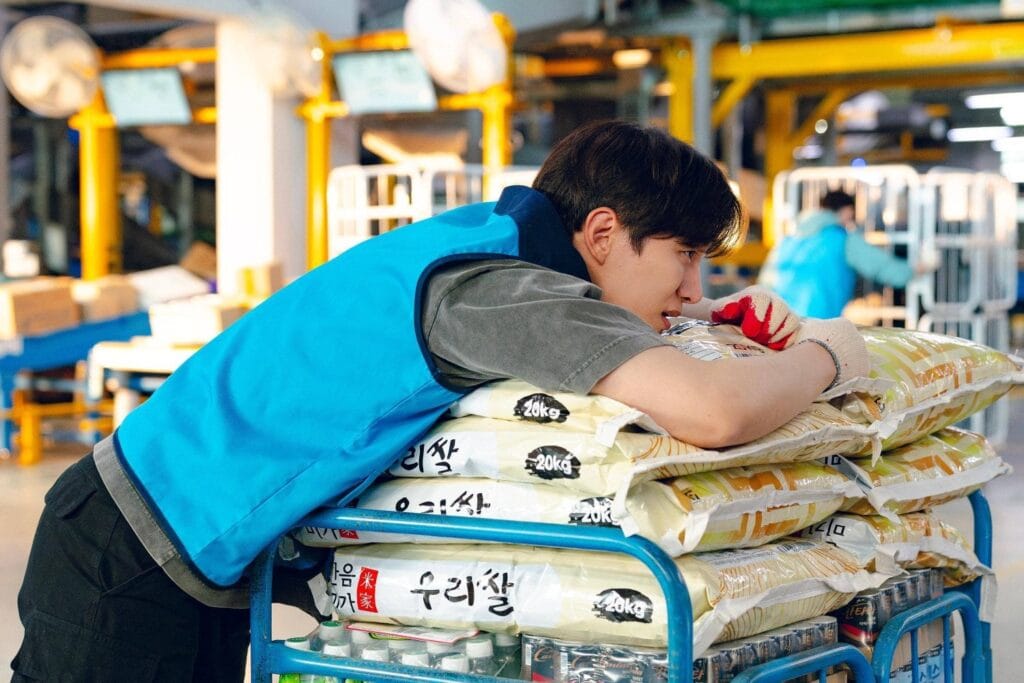
Character Analysis: A “Baeksang” Cast in a Cartoon World
Kang Sang-ung (Played by Lee Jun-ho)
Lee Jun-ho anchors the show with his portrayal of the awkward, reluctant hero. He deftly balances the character’s selfishness, cluelessness, and kindness—sometimes all at once. His comedic timing is gold, especially in scenes where he tries to conserve energy to save money. However, the writing fails him; Sang-ung drifts through the narrative with minimal growth, protected from accountability by the show’s indulgent framing. Despite this, his internal monologues provide humor and a window into his self-deprecating charm.
Kim Min-suk (Played by Kim Hye-jun)
Min-suk is a realistic, efficiency-obsessed accountant. She is the most polarized character. I found her constant anger to be the only thing that feels human in this chaotic script. Yet, the script confines her to a reductive portrayal of a nagging, money-obsessed partner. The chemistry between her and Sang-ung is a total desert with zero evidence of a shared history.
The Misfit Sidekicks: Byeon Ho-in & Bang Eun-mi
The ensemble provides much-needed tonal relief but is largely underused.
- Byeon Ho-in (Kim Byung-chul): A lawyer who phases through walls when intoxicated. His arc touches on the quiet devastation of a man who drinks himself into usefulness.
- Bang Eun-mi (Kim Hyang-gi): Her telekinesis is fueled by calorie intake, mostly bread. She shares a sibling-like dynamic with Sang-ung that is a standout, providing warmth and tonal relief.
The Villains: A Cartoonish Letdown
The antagonists are the show’s weakest link.
- Jonathan (Lee Chae-min): Badly miscast. Sorry. He comes across not as a menacing threat but as a kid holding a remote control playing. His performance lacks range, maintaining the same two expressions regardless of the situation. Is this a bi-dimensional character, I wonder. Hmm..
- Cho Anna (Kang Han-na): A talented actress reduced to a one-dimensional villain with exaggerated evil background music that unintentionally makes her feel cartoonish. We never really learn the origins of their “Criminals’ Association” or the depths of their sibling rivalry.
Memorable Quotes
- “When you are in the act of saving someone, there comes a moment where money simply stops mattering.” — Sang-Ung’s Father
- “Strength equals sacrifice, and the bill is always due.”
- “Not all heroes wear red undies (some wear white).”
- “Would you sacrifice 30 million won to save a bus full of people?”
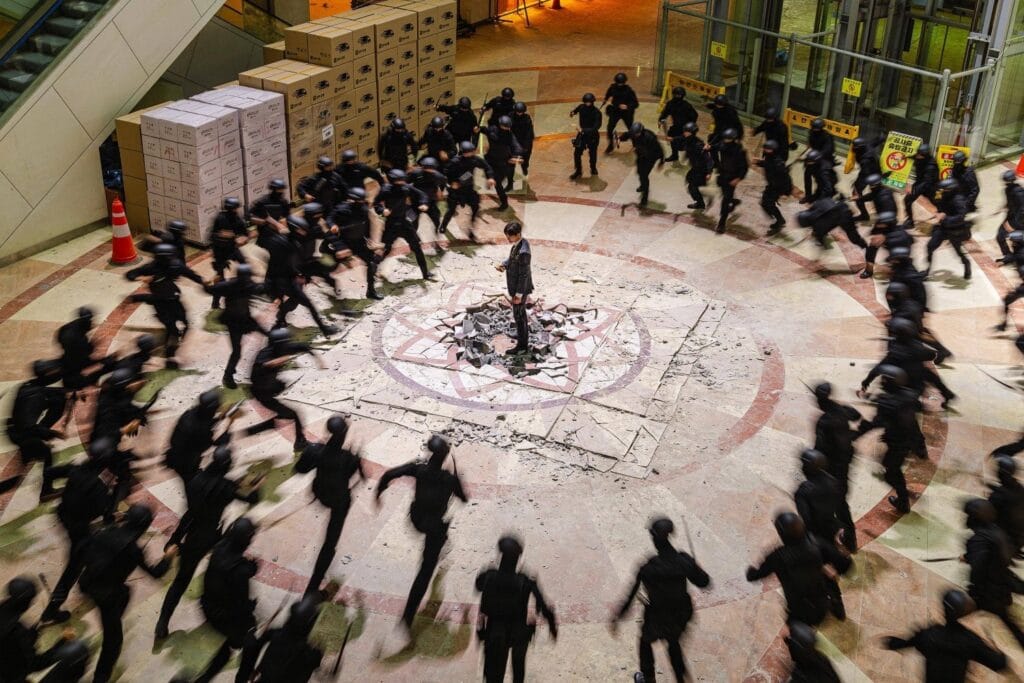
Cinematography & Visuals: A Tonal Rollercoaster
If the writing is uneven, the directing is often baffling. The drama struggles to define its identity, piling up effects-driven set pieces alongside incompatible emotional beats.
- The Editing Problem: The series repeatedly undermines emotional stakes through abrupt shifts. In one jarring instance, Sang-ung witnesses people die violently at the hands of Jonathan, only for the story to immediately pivot to a warm domestic scene where his trauma appears to have vanished entirely. I honestly couldn’t tell whether the acting was bad because of the editing or if it was just generally bad.
- Visual Style: The action feels generic and under powered compared to shows like Moving. The fight choreography lacks distinction, often looking like two people fighting each other for no reason. Some b-action movies have better fight scenes.
- Bizarre Choices: Specific directing choices drew my ire, such as a weird camera sequence in the last episode with the apartment building. Some off balance artistic expression.
Impact & Reception: A “Peculiar” Divide
Cashero is one of those dramas that divides audiences. The pacing is horrendous. There are long scenes of antagonists doing evil stuff that leads nowhere. The show evaporated through its narrative capital too early, specifically in the second episode where a surprise bag of cash blows up the stakes.
Despite the flaws, I admit that it can be refreshing and binge-worthy, under some severe preconditions. It serves as a perfect popcorn flick —lightweight, fast-paced, and action-packed, even if badly choreographed. It is a hot mess, but it is the kind of chaos that makes you feel alive, if you can put aside all expectations for a real great drama and prepare for absurdities and quirky humor.
🕵️♀️ A Special Episode: Episode 8 (and the logic leading up to it)
To truly understand this K-drama, we must examine the specific moments where the show’s logic battles its entertainment value.
1. The “High-Waisted White Undies” Moment 🩲
In a show about saving the world, the most memorable gadget isn’t a high-tech suit, but a pair of underwear. Bang Eun-mi gifts Sang-ung special high-waisted white undies to prevent his precious coins from falling out of his pockets during fights. It is a practical yet deeply awkward solution that perfectly captures the show’s quirky humor. Sang-ung’s internal monologue—lamenting that even his girlfriend hasn’t bought him underwear—adds a layer of self-deprecating comedy that Lee Jun-ho sells perfectly. This is Cashero at its best: absurd, funny, and character-driven.
2. The Church Fire Fiasco 🔥
Conversely, the “Church Fire” scene represents the show’s narrative breakdown. Sang-ung and Min-suk remain inside a burning, collapsing building for an extended period, a decision that drove me insane because of its unrealness. Why stay? Seemingly just so the villain could arrive for a dramatic confrontation. The logic evaporates to service a generic thriller beat, illustrating the show’s tendency to toss everything in a small pot and hope we eat it, with a big smile. It forces us to treat the show as a cartoon where heroes survive inexplicably.
3. The “Bus Scene” & The Dilemma 🚌
The show briefly shines when it embraces the human cost. The question posed to us is haunting: “Would you sacrifice 30 million won to save a bus full of people?”. A forced utilitarian question that one accepts it almost instantly. It encapsulates the drama’s core dilemma. However, the show squanders this tension; a rather prolonged early arc centered on an unexpected bag of cash exhausts the concept in one fast stroke removing the ticking clock element too early.
4. The Finale: A Community of Pennies 🪙
The ending brings the central metaphor full circle. The moment the community rallies around Sang-ung, giving him their money so he can defeat the villain, is actually touching. And somewhat redeeming. It turns the concept inside out: pennies matter, and community matters. Yet, for many of us, this emotional payoff was undercut by the cartoon logic that led us there, including a villain defeat that involved merely being tied by electricity cables.
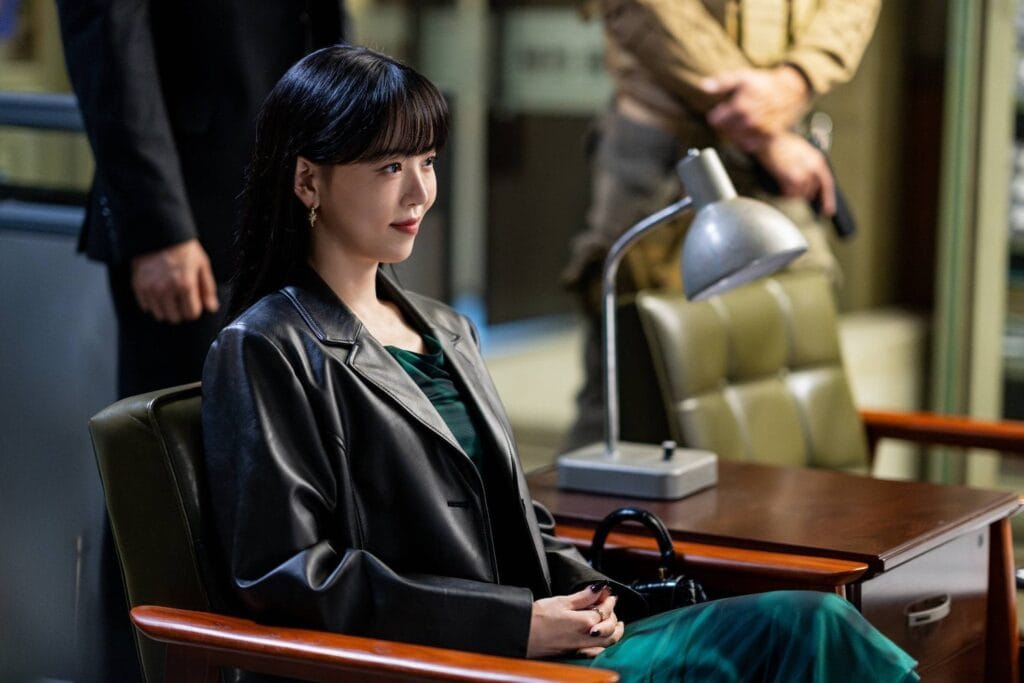
Cashero: Zero Cash, Some Heart
This is a drama that tries to be everything—a social satire, a superhero thriller, a romantic comedy—and succeeds at none of them fully. It trades a clever look at financial stress for generic thriller tropes, leaving us to reconcile the contradictions on our own.
The chemistry is absent, the villains are silly and useless, and the editing is jarring. Yet, beneath this hot mess” and the lazy writing, there is a kernel of sincerity. The final message—that strength comes from what we are willing to give up for others—is moving, even if the road to get there is paved with plot holes.
My Final Verdict:
- Watch It If: You are a dedicated fan of Lee Jun-ho and want to see him in a role that highlights his physical comedy and charm. You enjoy dramas that are flawed but fun, lightweight, and don’t require intense mental energy.
- Skip It If: You are looking for the next Moving, Atypical Family or a superhero drama with rigorous world-building and logic. You are easily frustrated by nagging female leads, cartoonish villains, or bad editing.
Ultimately, Cashero is like its protagonist: it has a lot of potential, but it’s always running a little short on currency.



Leave a Comment