


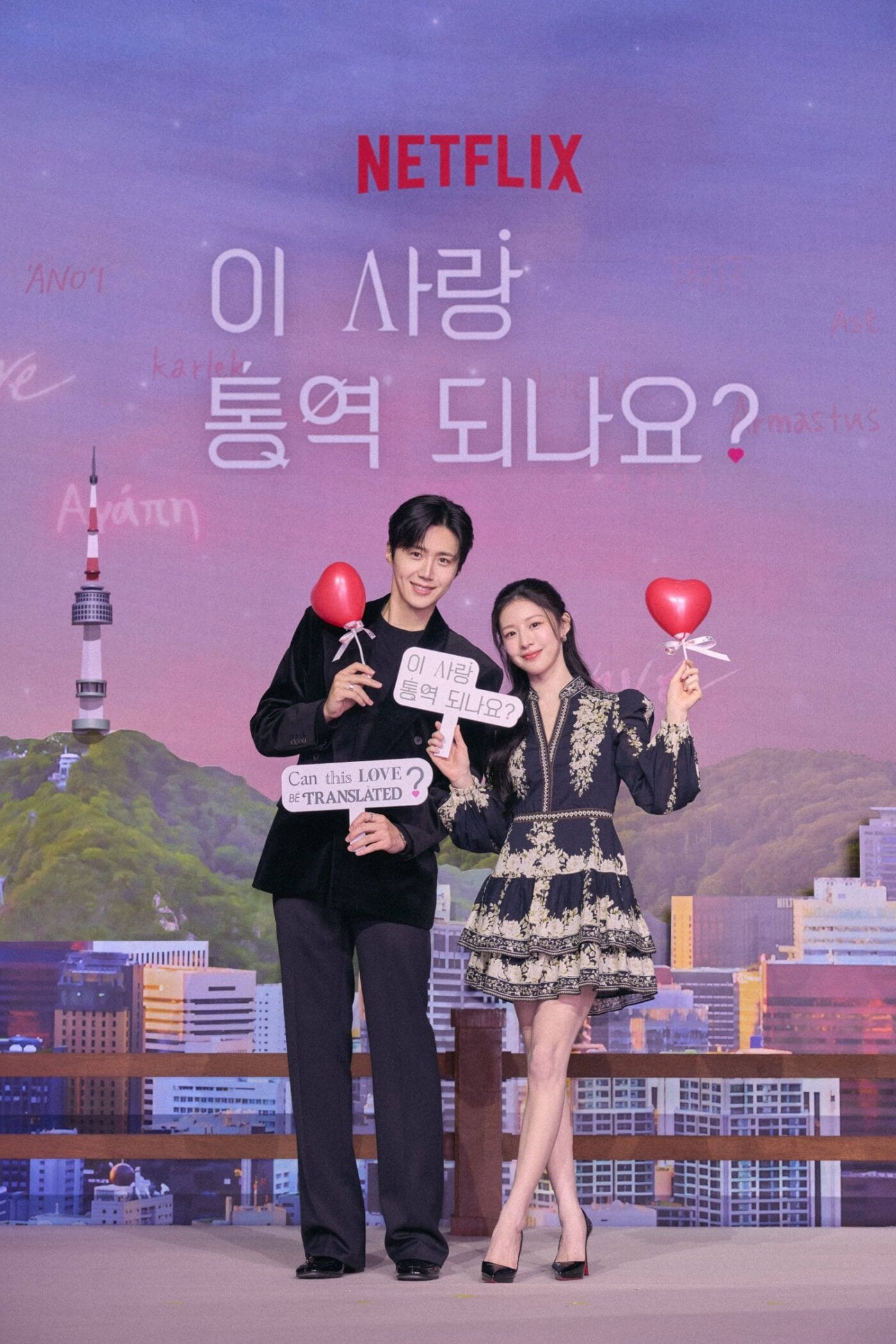

Here is the raw data on Netflix’s latest blockbuster, Can This Love Be Translated?: It was filmed across four distinct countries, features a protagonist who fluently speaks six languages, and boasts a visual score that critics are unanimously rating 10/10. On paper, this should be the biggest hit of 2026. I repeat. On paper.
The truth, however, is different. You see the numbers hide a severe fatal flaw. Despite the multilingual setup, the characters struggle to communicate a single basic truth for twelve agonizing episodes. If you are wondering how a show can look this expensive but feel this confused, you aren’t alone. In this review, we dissect how the Hong Sisters created a visual masterpiece that ultimately got lost in translation—and whether Go Youn-Jung’s magnetic performance is enough to save it.
Synopsis: The Interpreter and the Idol
The premise is deceptively simple, built on the classic “opposites attract” framework. The story follows Joo Ho-Jin (Kim Sun-Ho), a brilliant multilingual interpreter with extraordinary skills in English, Japanese, and Italian. His life is defined by order, structure, and a straight, orderly existence. He is the conduit for others’ words, never the source.
His controlled world collides with Cha Mu-Hee (Go Youn-Jung), a top global star known for her bright charms and immense confidence. Hired as her interpreter for a global tour, Ho-Jin is thrust into her orbit not just as a translator, but as a damage control specialist. The core tension arises from their professional proximity; what begins as a business arrangement slowly evolves into a precarious emotional entanglement as they traverse foreign landscapes together.
However, the romantic setup serves as a Trojan horse. Beneath the glamorous surface of celebrity life lies a deeper narrative tied to past traumas. As they travel from the Shonan coast of Japan to the streets of Italy, a third persona emerges—Mu-Hee’s alter ego, “Do Ra-Mi”—forcing both characters to confront the “lost in translation” nature of their own emotions.
Key Themes & Narrative Arcs
1. The Dissonance of Genre: Rom-Com vs. Psychological Thriller
The show’s biggest hurdle—and its most fascinating flaw—is its marketing. Those among viewers expecting a whimsical tale of a prince charm and damsel in distress were met with a narrative that pivots sharply into childhood trauma and mental health struggles. The series tries to balance comedic tropes with the heavy reality of Mu-Hee’s fractured psyche, specifically a plotline involving Dissociative Identity Disorder (DID). This results in a jarring tonal shift, particularly around Episode 7, where the show seemingly abandons its romantic roots to become a melodrama. It is a bold risk that creates a viewing experience that feels like watching two different dramas stitched together: a romantic travelogue in the first half, and a psychological character study in the second.
2. The “Do Ra-Mi” Effect: Identity as Armor
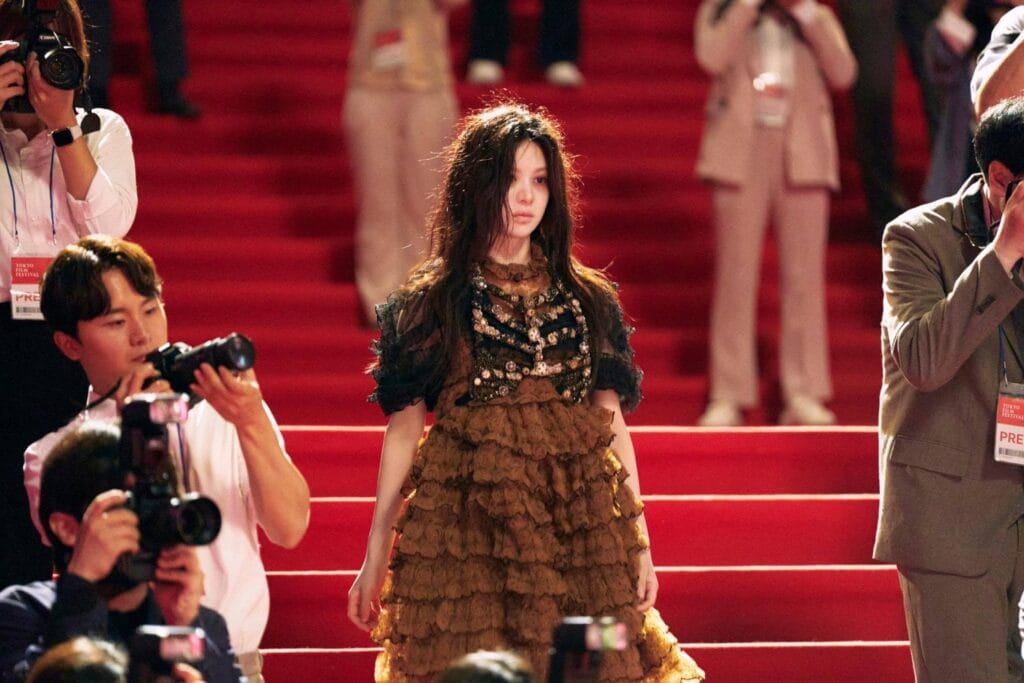
The standout element of the series is not the romance, but the exploration of the female lead’s internal warfare. The narrative only truly finds its footing during the visions and shifts into the Do Ra-Mi persona. This alter ego is not just a plot device but a manifestation of survival. “Do Ra-Mi” becomes the vessel for the show’s most detailed and compelling acting moments, with Go Youn-Jung channeling all her energy into a badass side reminiscent of non other that Wednesday Addams. This persona operates at a frequency that dominates the screen, often dwarfing the rest of the production.
3. Communication Breakdown in Six Languages
There is a rich irony at the heart of the script: despite a protagonist who is a multilingual genius capable of speaking six languages, the characters struggle to communicate basic truths. The theme of lost in translation is applied not just to the dialogue, but to the plot itself. The narrative is often bogged down by endless misunderstandings and unspoken feelings, dragging the pacing into a cycle of rejection and pursuit. Perhaps it would have been better for the show to utilized the international settings to explore cultural nuances of love rather than just using them as backdrops.
4. The “Green Flag” Dynamic
In a genre often plagued by toxic masculinity, the show offers a refreshing alternative. Both the male lead and the second male lead, Hiro, are modern men who understand boundaries and respect the female lead. Sota Fukushi‘s character, in particular, is noted for being a gentleman who knows when to back off, avoiding the possessive second-lead BS common in similar dramas. This refusal to rush the healing process for the sake of romance is perhaps the show’s most mature thematic choice.
Character Analysis
Joo Ho-Jin (Played by Kim Sun-Ho)
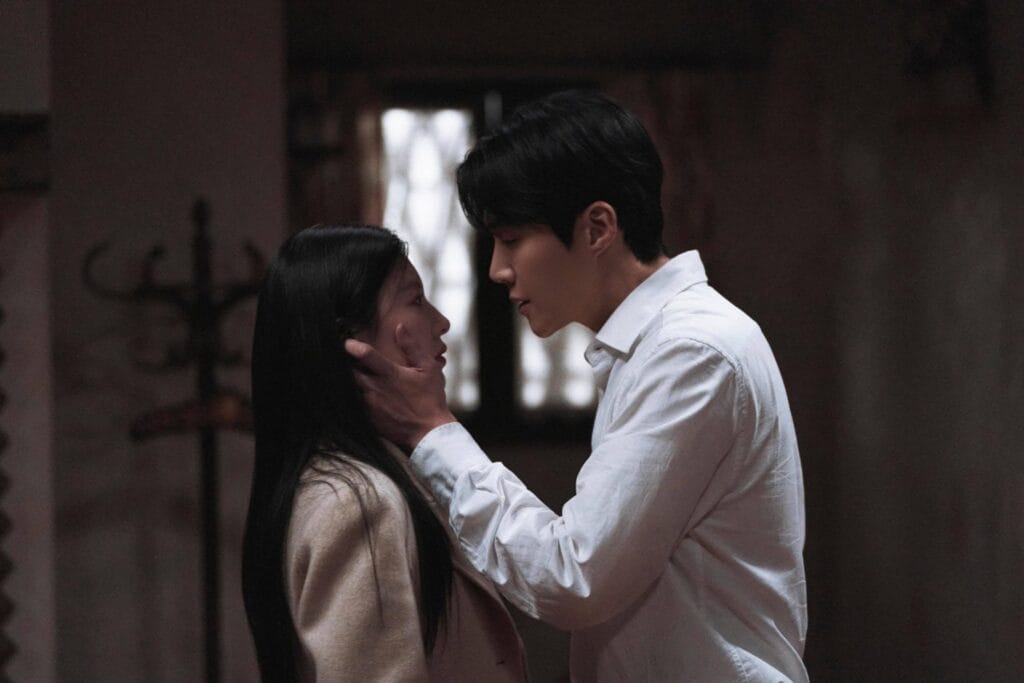
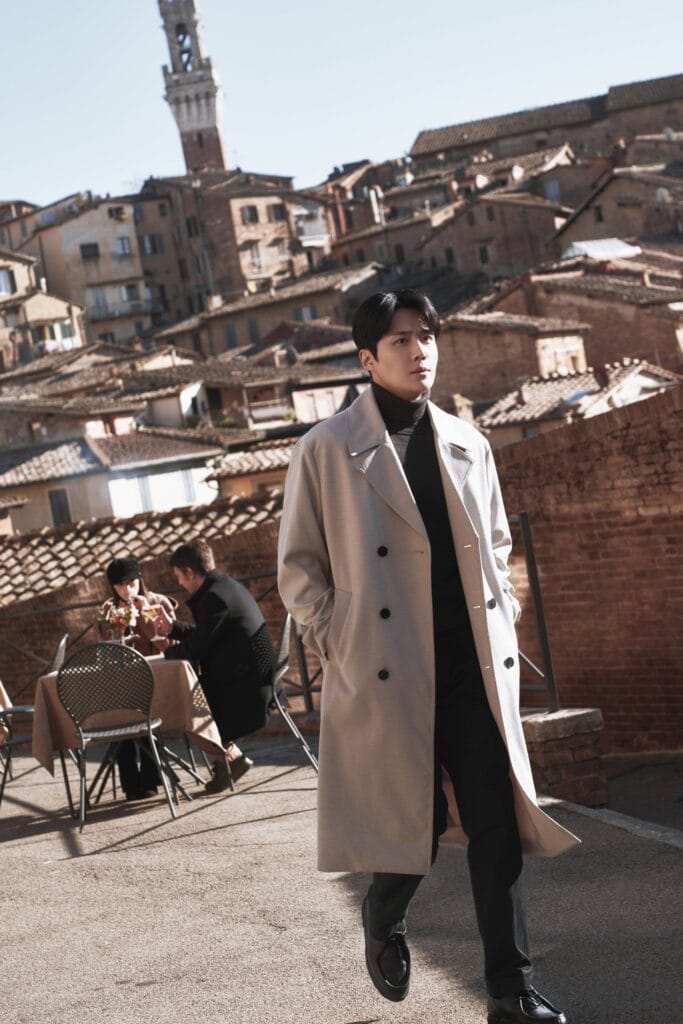
Kim Sun-Ho returns to the screen with his signature weapon: those nuanced eyes that convey a profound sense of unspoken weight. As an interpreter, his delivery of multiple languages is natural and confident, avoiding the awkwardness often seen in cross-cultural dramas. He plays Ho-Jin with a quiet restraint, embodying the professional invisibility his job demands. However, the script often leaves him stranded in passivity. His character is frequently reactive rather than active, becoming something as background noise in the second half, as his agency eroded by the overwhelming focus on the female lead’s trauma.
Cha Mu-Hee / Do Ra-Mi (Played by Go Youn-Jung)
If there is a singular reason to watch this drama, it is Go Youn-Jung. She doesn’t just play dual roles; she anchors the entire production. As Cha Mu-Hee, she is the quirky, fragile star, but as the alter ego Do Ra-Mi, she is electric—a dynamic force of nature that steals every scene she inhabits. Her performance is so compelling that the scenes featuring the alter ego are the absolute highlight of the series. She proves her incredible range, making us believe in two distinct people inhabiting one body: one who begs for love, and one who rejects it to survive.
Hiro Kurosawa (Played by Sota Fukushi)
The inclusion of Japanese actor Sota Fukushi provides a break from the arrogant and t toxic second lead trope. He plays Hiro as a respectful, thoughtful man who offers a different kind of love—one that is undemanding and steady. While one may feel his inclusion cluttered the plot or served as a mere tool to stretch the runtime, his chemistry with the female lead is at times more balanced and engaging than the main pairing.
👗 Fashion Focus: The Style Translation of Cha Mu-Hee
In a drama where communication fails, the wardrobe speaks volumes. The fashion in Can This Love Be Translated? is not merely aesthetic decoration; it is a primary tool for distinguishing between the fractured identities of the female lead. For those among us interested in fashion Go Youn-Jung’s wardrobe is a standalone reason to watch the drama.
Here is a breakdown of the key looks that defined her character arc:
- The “Wednesday” Goth (The Do Ra-Mi Aesthetic):The most discussed style evolution occurs when the alter ego, Do Ra-Mi, takes control. There are immediate parallels between this look and the iconic Wednesday Addams, citing a darker, quirkier energy that contrasts sharply with the main character’s usual polish. This look was so effective that serves as a visual warning sign: when the colors drain from her outfit, the language changes from soft curves to sharp edges.
- The Global Superstar (The Cha Mu-Hee Standard):As a top star, Mu-Hee’s primary wardrobe is defined by high glamour. Her costumes were so beautiful to look at and matched the high production value of the filming locations. These outfits act as her armor against the world; whether she is in the snows of Canada or the streets of Italy, her style reinforces the facade of the perfect celebrity life that Ho-Jin is hired to protect.
- The “Lost in Translation” Palette:The cinematography—praised as mesmerizing and nature-documentary-esque—works in tandem with the wardrobe. The styling shifts to match the color grading of the three distinct locations, grounding the characters in their physical journey even as their emotional journey spirals.
While the script may leave room for “interpretation”, rather than “translation” the wardrobe department never missed a beat proving that even when the plot stumbles, excellent styling can provide a safety net.
Visuals, Cinematography & Soundtrack

There is zero debate here: the visuals are a 10/10. Shot across South Korea, the Shonan area of Japan, Italy, and Canada, the series is a visual masterpiece that often resembles a high-budget travel or nature documentary.
- The Emotional Color Grading: The cinematography utilizes a distinct color palette to narrate the characters’ internal states. The production uses warm yellows and oranges to signify connection, contrasting sharply against cooler blues and greys that represent isolation and distance. The transition between the vibrant streets of Italy and the serene, muted landscapes of Japan isn’t just a change of scenery—it helps delineate the emotional stages of the characters’ journey, grounding the push and pull of their relationship in the environment itself.
- The “Zombie Movie” Aesthetic: In a meta-twist, the scenes depicting the “Zombie Movie” Mu-Hee is filming are stylistically distinct, offering a glimpse into the darker, more interesting potential of the show’s visual language.
- The Soundtrack: The OST is atmospheric and essential, blending perfectly with the emotional beats of the overall travelogue style. It elevates scenes of mere walking or sitting into moments of profound longing. A specific standout is a violin cover of a BLACKPINK song, which underscored the tension between modern pop culture and classical tragedy, creating an incredible auditory experience.
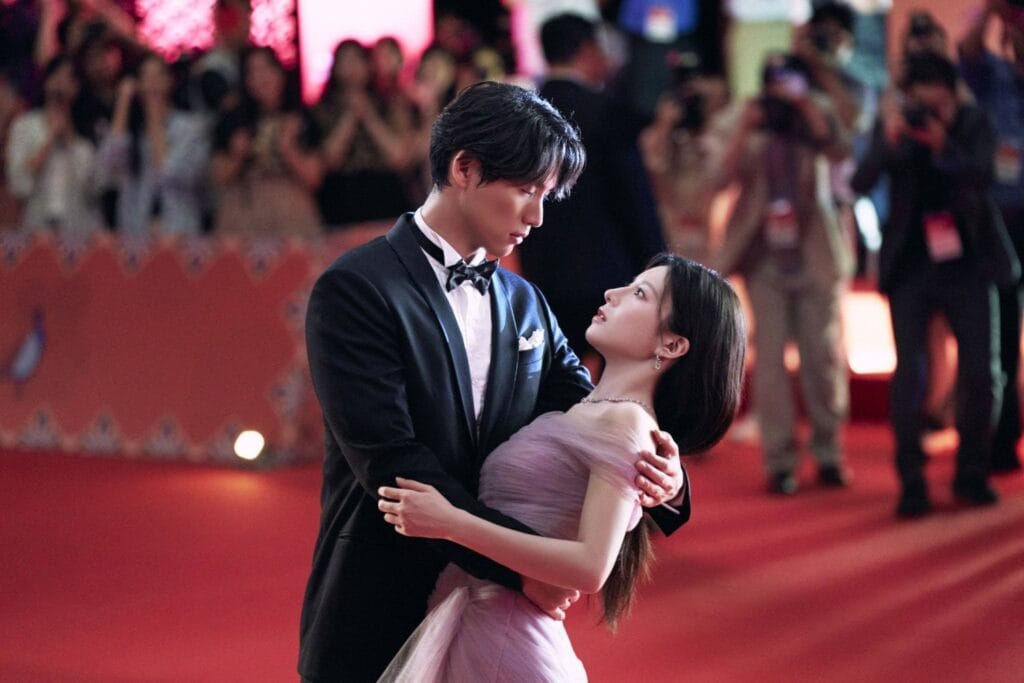
Defining Dialogue & Production Insights
Rather than standard romantic declarations, the show’s most impactful lines focus on the struggle to comprehend one another.
- The Struggle to Understand: In a pivotal moment of conflict, the female lead challenges Ho-Jin, stating that she is willing to endure his words regardless of whether they sting or cut, because this time, she will understand them.
- The Danger of Love: The stakes of the alter ego are summarized chillingly by a producer within the show, who notes that while the Do Ra-Mi persona isn’t a murderer, she destroys the man she loves.
- Miscommunication: Despite the characters’ closeness, Ho-Jin often failed to simply say I like you, relying instead on a nonchalant demeanor that exacerbated the misunderstandings.
Critical Reception: The “Hong Sisters” Curse?
At the very end the show suffers from the infamous “Hong Sisters Curse”: a brilliant, engaging start that loses its way in the middle and unravels at the end.
- The First Half: The initial episodes are a breath of fresh air, fun, cute, and engaging. The premise feels innovative, and the chemistry between the leads initially is sizzled with potential.
- The Pivot: Around Episode 7, the pacing noticeably drags, and the introduction of heavy trauma plots feels elongated and repetitive. The “lost in translation” metaphor began to feel literal, as the plot seemingly looses its direction in an endless sea of side stories.
- The Ending: The finale, featuring a major twist regarding Mu-Hee’s parents—revealing they were alive—was introduced in the final 30 minutes. This felt more like a dirty and lazy shortcut adding a bizarre addition that resolved major conflicts off-screen than giving the audience time to process the new information.
🎬 A Special Episode: The Shift (Episode 7-8)
If the series has a heartbeat, it is found in the transition that occurs during Episodes 7 and 8.
🎭 The “Ache” vs. The Concept
For the first half of the series, the chemistry between Kim Sun-Ho and Go Youn-Jung can feel theoretical—a standard romantic push and pull. It is in these mid-season episodes, however, that the chemistry finally evolves into a tangible ache rather than just a concept. This is where Go Youn-Jung is allowed to break under the pressure of her situation, adding a much-needed depth that was missing previously.
🧠 The Missed Psychological Opportunity
These episodes presented a golden opportunity to lean harder into the dialogue between Mu-Hee and her alter ego. The potential for a sharp, incisive narrative was right there, yet the script somehow hesitated. Instead of filling the runtime with generic plot fillers, the story could have focused entirely on the psychological gravity of her two sides warring with one another.
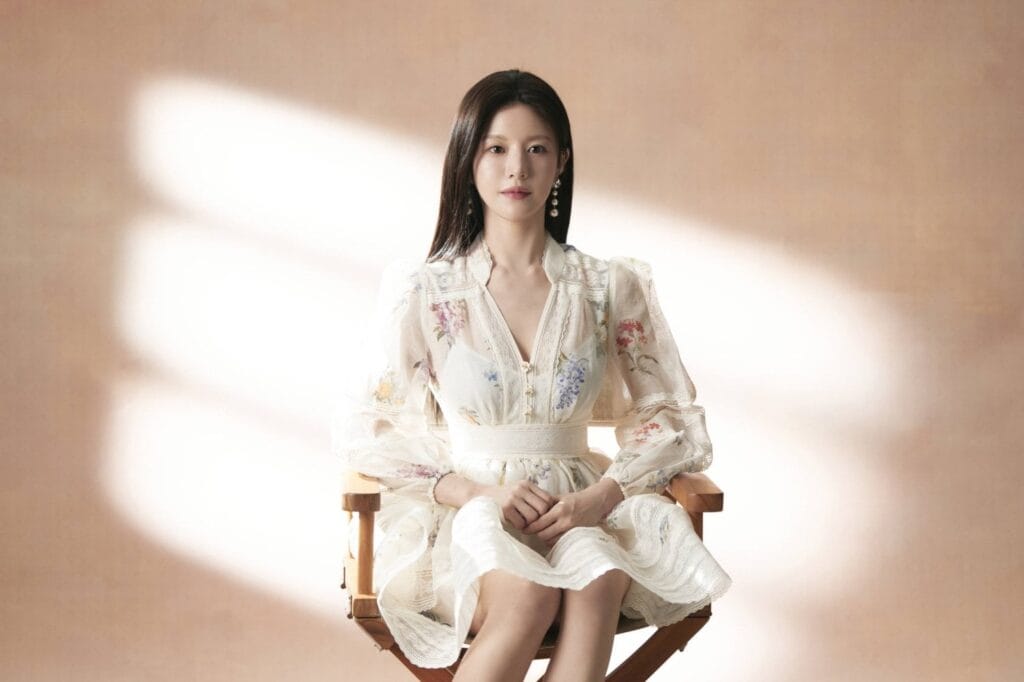
Can This Love Be Translated?: Watch or Skip?
The drama despite its charms is a production of immense contradictions. It features top-tier acting and stunning visuals but is let down by a confused script that doesn’t know if it wants to be a rom-com or a psychological thriller. It is visually delicious, but structurally unstable and crumbles under its own aspirations.
The Final Verdict:
- Watch It If: You are a fan of Go Youn-Jung and want to see a career-defining performance of duality. Watch it if you appreciate high-budget cinematography and gentle male leads who are patient, even to a fault. The locations alone—from Enoshima to Italy—are worth the price of admission.
- Skip It If: You are looking for a tightly plotted, stress-free rom-com. The parents are alive twist in the finale and the heavy reliance on miscommunication will likely frustrate you. If you need your dramas to make logical sense from start to finish, this translation might not be for you.
Ultimately, Can This Love Be Translated? is a testament to the power of actors to elevate material. You might not finish it for the plot, but you will stay for the breathtaking views and the magnetic pull of Go Youn-Jung‘s eyes as she switches from the girl who wants to be loved to the girl who refuses to be hurt.




Leave a Comment