


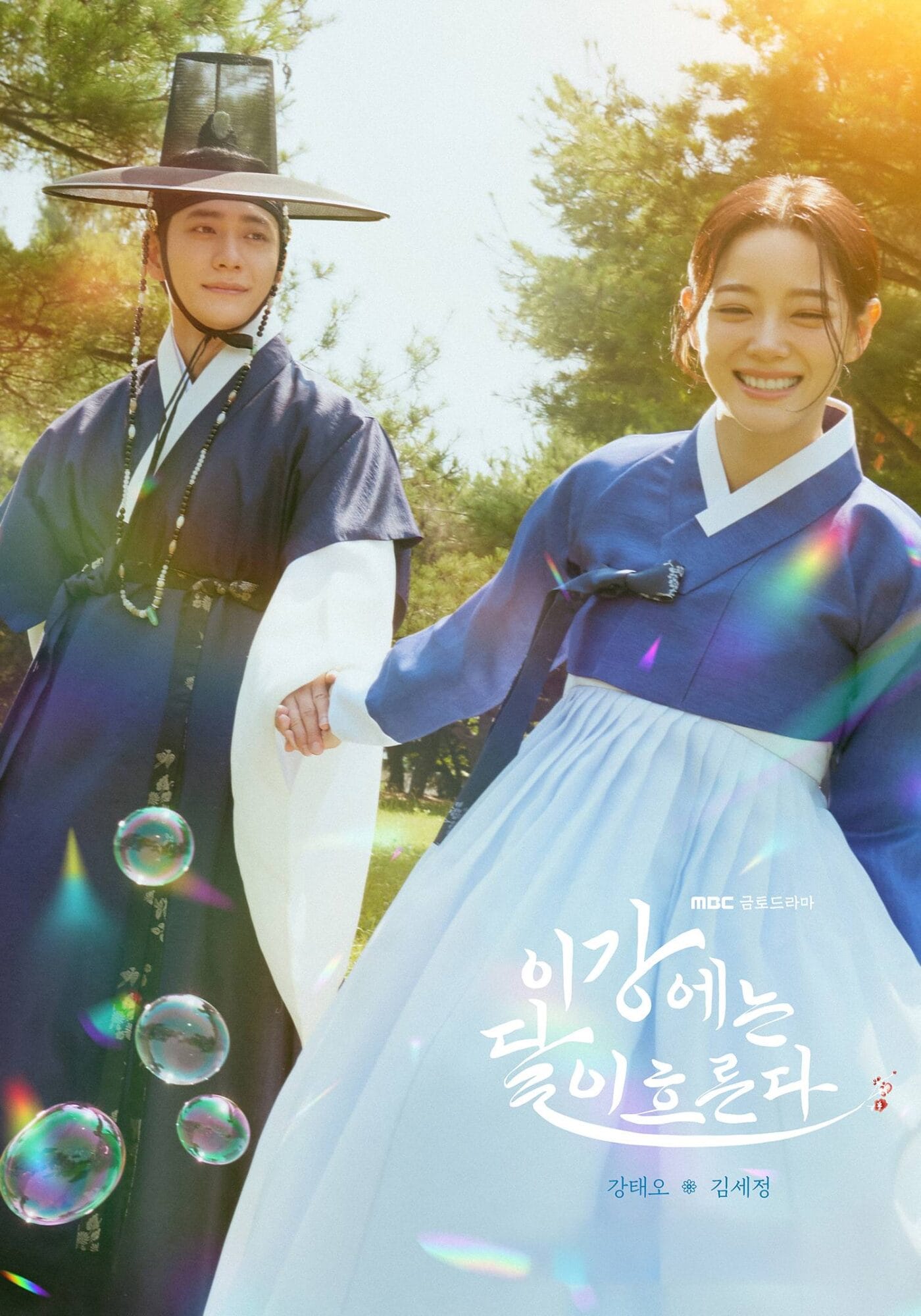

Kang Tae Oh didn’t just win the Top Excellence Award at the 2025 MBC Drama Awards—he earned it by playing two people at once. Most historical dramas rely on political chess games to keep you hooked. “Moon River” did something riskier: it took a “mid” script riddled with plot holes and saved it purely through the electric performance of its leads. While the writing stumbles over confusing plot devices like the infamous “Zen bird,” the sentiment is clear: this is an emotional masterpiece. This review cuts through the hype to analyze how elite acting salvaged a flawed story, and exactly why the ending makes every frustrating moment worth it.
The Gamble of the Year
By late 2025, the sageuk (historical drama) genre felt like it was running on fumes. We had seen every variation of the cold prince and the sunny heroine, every political chess game, and every tragic destiny. Then came “Moon River” airing from November 7 to December 20, 2025, on MBC. Starring the powerhouse duo Kang Tae Oh and Kim Se Jeong, this drama took a massive gamble by mixing the gravitas of court politics with the chaotic, often slapstick absurdity of a body-swap fantasy.
Did it work? If you look at the script alone, it’s a bumpy ride. There are plot holes you could drive a carriage through. But if you look at the screen—at the electric, tear-jerking performances of its leads—it is an undeniable triumph. As a critic, I often look for artistic and structural perfection, but “Moon River” proves that sometimes, raw emotional resonance matters more than a flawless plot. It is, without a doubt, one of the best dramas of 2025, anchored by a chemistry so potent it salvaged a “mid” script and turned it into gold.
Synopsis: Destiny, Displacement, and Dandyism
Yi Gang (Kang Tae Oh) is a Crown Prince slowly dying inside. Masking his pain behind the façade of a frivolous dandy, he has spent five years plotting revenge for the death of his wife, the Crown Princess. He is a man who has lost his smile, surviving only on the fumes of vengeance. Park Dal (Kim Se Jeong) is a sharp-tongued, resourceful traveling merchant with no memory of her past—who, unbeknownst to her, is the very Princess Yi Gang mourns.
Their fates are violently entangled by the “God of Destiny” and a mystical “Red String,” causing them to swap bodies at critical moments. What starts as a comedic inconvenience the body swapping evolves into a profound tool for survival. They must literally walk in each other’s shoes: Yi Gang experiencing the helplessness of a commoner under a corrupt regime, and Dal navigating the lethal viper pit of the palace. Together, they must uncover the conspiracy led by the terrifying Left State Minister, Kim Han Chul (Jin Goo), while fighting a destiny that seems determined to keep them apart.
Themes: The Heart of the River
- To Protect is to Sacrifice The word “protect” is the heartbeat of this series. The drama posits a heavy question: Is self-sacrifice noble, or is it selfish because of the pain it inflicts on those left behind? From the King making himself a slave to power to save his son, to the villain burning the world down for a lost love, every action is driven by a twisted or pure desire to protect. The drama explores the cost of these choices, suggesting that true protection requires presence, not just martyrdom.
- Identity & Empathy via Displacement While body-swapping is often played for laughs (and there are laughs), “Moon River” uses it as a vehicle for radical empathy. The swap is a meant for living in each other’s shoes for once and fully experience that life. Yi Gang doesn’t just learn about Dal’s life; he learns to feel her helpless resentment against the nobility. Dal doesn’t just see the Prince’s power; she feels the suffocating weight of the crown. This shared existence creates a bond that transcends typical romance tropes—they literally share a soul.
- Fate vs. Free Will The “Red String of Fate” suggests predetermined paths, but the characters constantly fight to reclaim their agency. The drama beautifully illustrates that while fate may bind people together, it is their choices—to trust, to communicate, to stay—that define their love. They are not passive victims of the “God of Destiny”; they are active participants in rewriting their ending.
Character & Cast Analysis

Yi Gang / Crown Prince (Kang Tae Oh)
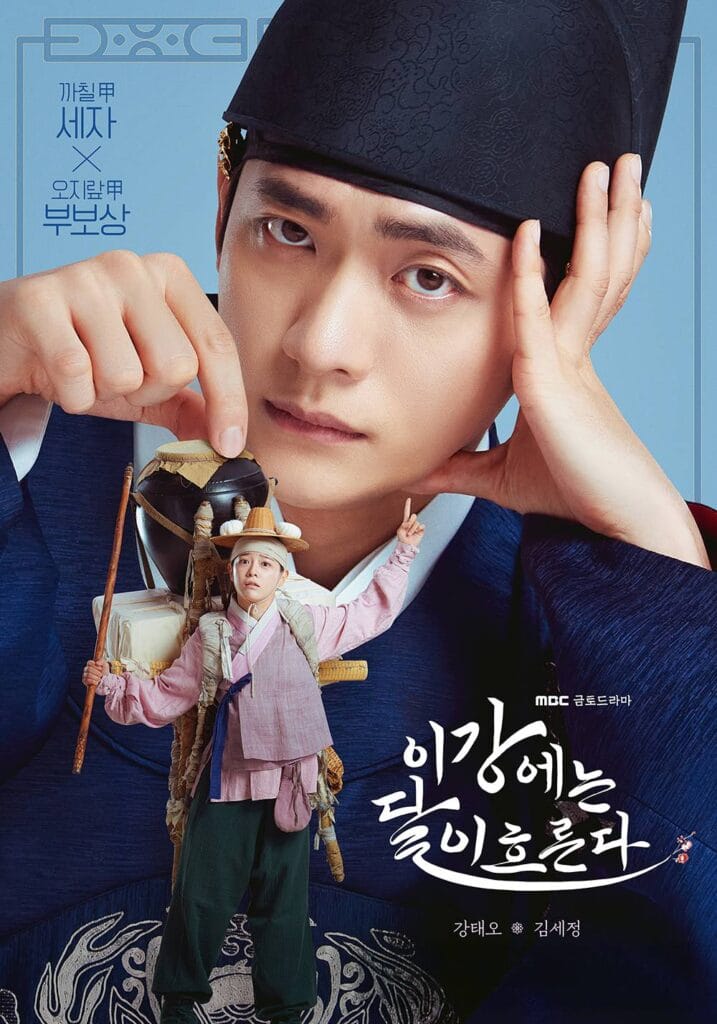
Kang Tae Oh delivers a career-defining performance, earning him the Top Excellence Award at the 2025 MBC Drama Awards. He balances three distinct personas: the grieving husband, the fake dandy, and—most impressively—Park Dal trapped in a Prince’s body. His ability to mimic Kim Se Jeong’s troublemaker mannerisms without falling into caricature is elite acting. His portrayal of grief, specifically the screaming crying to the core, feels devastatingly natural. He anchors the show’s emotional weight.
Park Dal / Crown Princess (Kim Se Jeong)
Kim Se Jeong brings her signature energy—badass, resourceful, and deeply emotional. She is not a damsel; she is a survivor. Her performance shines brightest when she has to channel the Prince’s authority while in her merchant body, providing both comedic gold and empowering moments. The transition from a carefree merchant to a woman burdened by recovered memories is handled with subtle grace.
Left State Minister Kim Han Chul (Jin Goo)
A villain driven by power-induced rot but with a twist. The Left Minister is not your normal Sageuk villain. Jin Goo plays him with chilling restraint—no cheesy outbursts, just a quiet, calculating menace. He moves through the world like a ghost, his eyes betraying a deep, tragic history. He is a refreshing antagonist because his motivations are grounded in a twisted love, making him human rather than an evil caricature.
Prince Yi Un (Lee Shin Young)
The Second Prince is a revelation. In a genre rife with fratricidal subplots, it is nice to have two royal brothers who are not political or romantic rivals. Yi Un (Lee Shin Young) carries the second love line with dignity, often stealing scenes with his emotional maturity. His chemistry with Kim Woo Hee (Hong Su Zu) provides a fresh compelling subplot.
Verified Drama Quotes
- “The flowers of fate are originally white. But when two bound by the red thread recognize one another, they bloom in crimson.” — The God of Destiny
- “You are the exception to all my anger.” — Yi Gang
- “You are very lucky. You happened to meet me with that face.” — Yi Gang
- “Do you know what happens when you catch a falling petal? I must have caught two. After all, I tied the knot with my first love twice.” — Park Dal
Cinematography & Visuals
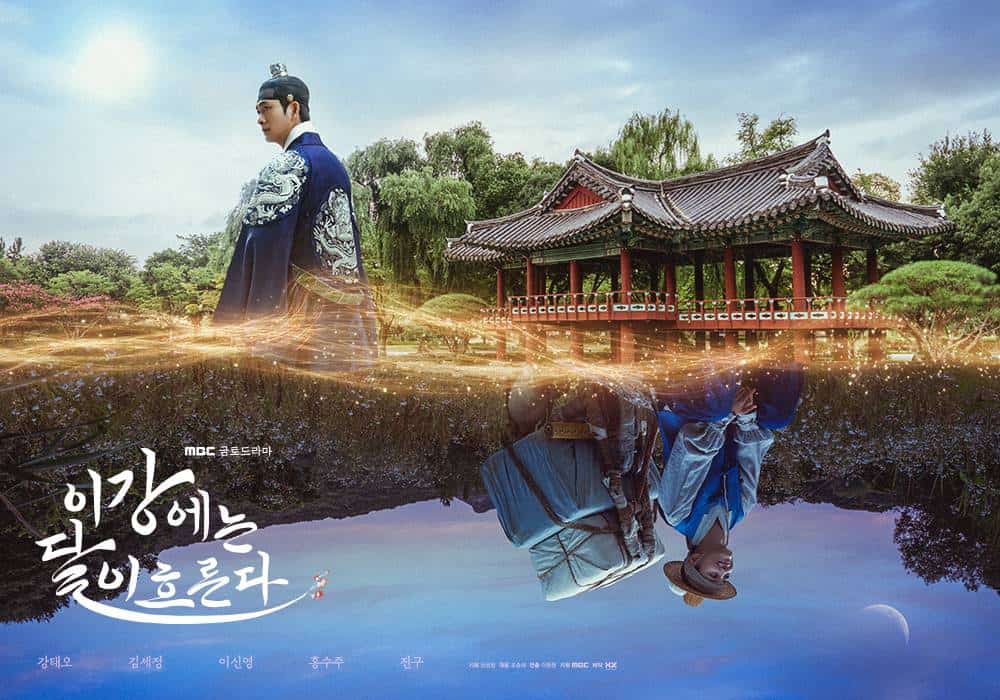
The visual language of “Moon River” is breathtaking, utilizing stark contrasts of red (fate) and white (mourning/purity). The cinematography is artful, elevating even the slower moments of the script. The beach scenes and the ending shots are particularly noted for their “Netflix-level” quality, providing a cinematic scope that many broadcast dramas lack.
The Soundtrack (OST):
The music is a standout success. Song So-Hee’s “But a Dream”, performed in a haunting Pansori style, is an “instant earworm” that adds a folklore gravity to the fantasy elements. It perfectly balances the comedy and seriousness of the dense story, ensuring the tone never shifts too jarringly.
Impact & Reception: The “Mid” Script vs. Elite Acting
Let’s address the elephant in the room: the script has flaws. The middle episodes suffer from a significant drag (repeating same events for 9 or 10 episodes), and plot devices like the “Zen bird” felt absurd. You can imagine the frustration of building a plot around a bird only to kill the bird in the stupidest way possible, leading to a baffling reaction from the Crown Prince where he seemed to forget about his revenge.
However, the drama salvages itself through the sheer force of its acting and a strong third act. While the script tries too hard to be too many things at once the actors—particularly the chemistry between Kang Tae Oh and Kim Se Jeong—elevate the material. They make you believe in the illogical. They make you root for them so hard that you forgive the narrative stumbles. It is a testament to their skill that “Moon River” is remembered not for its plot holes, but for its heart.
The Deep Dive Special: The Episode That Defines It All 🌊
🎭 Episode 12: The Strategic Swap
If there is one episode that epitomizes the entire drama experience—blending the comedy, the tragedy, the fantasy, and the strategy—it is Episode 12.
Why This Episode?
For the first half of the drama, the body swap is treated as a curse—a chaotic interruption that ruins plans. But in Episode 12, the narrative pivots. Yi Gang and Dal choose to embrace their swapped states to infiltrate the enemy’s mountain base.
- The Comedy & Skill: We see Kang Tae Oh acting as Dal acting as a spy, and Kim Se Jeong acting as the Prince acting as a warrior. It is a masterclass in meta-acting. They use their unique understanding of each other’s bodies to deceive the guards, turning their greatest weakness into their greatest weapon.
- The Emotional Core: This mission isn’t just about strategy; it’s about trust. They are literally placing their lives in each other’s hands. They aren’t just partners; they are two halves of a whole.
- The Villain’s Depth: This episode also peels back the layers of Minister Kim Han Chul, showing us the tragedy behind his ghost-like demeanor. We see the depth of his delusion and pain, setting the stage for the final confrontation.
It is in this episode that the show stops spinning in circles and starts sprinting toward the finish line, powered by the unity of its leads.
Moon River Final Verdict
This K-drama is a perfect example of a drama that is greater than the sum of its parts. It tries to be a political thriller, a fantasy romance, and a comedy all at once, and sometimes it stumbles under that weight. The writing can be clunky, and the pacing uneven. But it succeeds where it matters most: the heart.
The chemistry between Kang Tae Oh and Kim Se Jeong is off the roof, creating a love story that feels genuinely earned through sacrifice and mutual understanding. They take a premise that at first made no sense and fill it with such genuine emotion that you simply stop caring about the logic and start caring about the people.
Watch It If: You want elite acting, a unique Freaky Friday twist on history, and a romance that requires tissues.
Skip It If: You have zero tolerance for fantasy logic in historical settings or mid-season pacing slumps.
Final Verdict: An unforgettable emotional rollercoaster. Trust the chemistry, ignore the “Zen bird,” and let the OST carry you away. A true underrated gem.
Guide: Which “Soul-Swap” K-Drama to Watch Next?
If this drama gave you a taste for body-swapping chaos, check out this guide to see how it stacks up against the competition.
| Drama Title | Genre | Swap Dynamic | Tone Check | Watch If You Like… |
| Moon River (2025) | Historical / Fantasy / Melodrama | Lovers Swap (Prince ↔ Commoner) | Emotional, tragic, but with “Netflix-level” visuals. | Epic romance, high-stakes politics, and elite acting chemistry. |
| Mr. Queen (2020) | Historical / Comedy / Satire | Gender & Time Swap (Modern Chef ↔ Queen) | Hysterical, fast-paced, modern humor. | Laughing until you cry, modern slang in Joseon, and Shin Hye-sun’s masterclass acting. |
| Secret Garden (2010) | Modern / Rom-Com / Fantasy | Lovers Swap (CEO ↔ Stuntwoman) | Classic rom-com, campy but iconic. | The classics, tracksuit fashion, and bickering-to-love tropes. |
| Alchemy of Souls (2022) | Fantasy / Action / Romance | Soul Displacement (Assassin ↔ Blind Girl) | High fantasy, magical combat, epic world-building. | Magic systems, master-servant romance dynamics, and CGI spectacles. |
| Big (2012) | Modern / Rom-Com | Age Swap (Teenager ↔ Doctor) | Melodramatic, controversial ending. | Gong Yoo (that’s the only reason), and “noona” romances. |
Loved this review? Share your thoughts on the “Zen bird” fiasco in the comments below or tag us on Twitter with your favorite Kang Tae Oh moment! 👇




Leave a Comment